
I once adopted a feral cat and named her Descartes. It was an aspirational name for a street cat, but she quickly proved she possessed a calculating, philosophical genius. Descartes was so intelligent that she successfully ran a long-con on a neighboring household full of dogs. She manipulated them into accepting her presence and tricked their owners into feeding her daily, a grift I only discovered when I saw them post pictures of her on the internet.
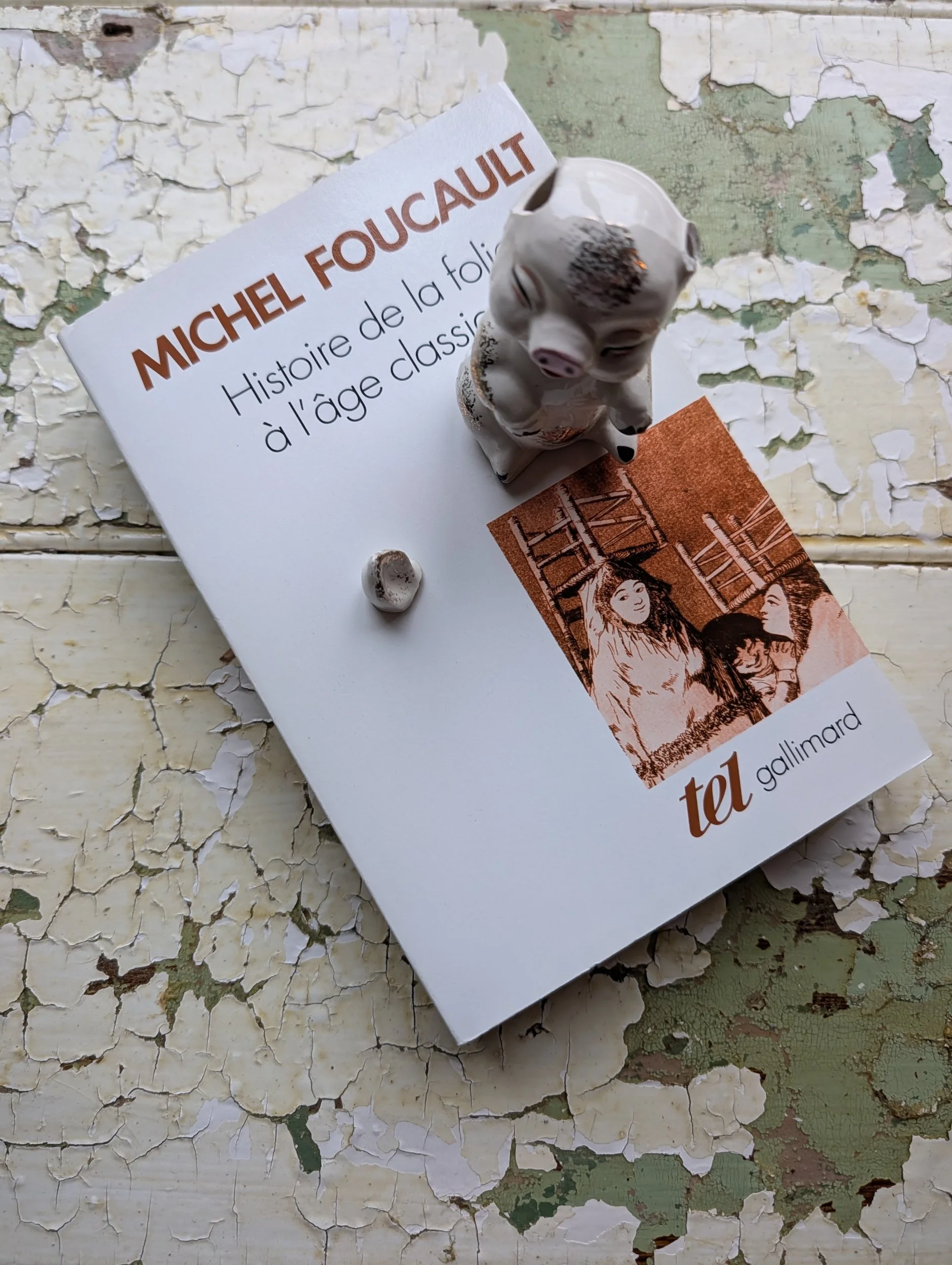
Her strategic maneuvering was not limited to securing extra meals. When the presence of her own son, Foucault, in my apartment became too irritating for her, she didn't just hide—she leaped off my balcony and vanished into the city. For an entire month, she was a ghost. Then, one afternoon, while I was sitting in a public park blocks away from my home, Descartes casually strolled out of the bushes and sat beside me. She hadn’t been lost; she had simply triangulated my routine and decided it was time to renegotiate our living arrangement on her terms. However, her grand return was immediately spoiled. Upon walking back into my condo, she was visibly outraged to discover that Foucault was still there, comfortably lounging in her territory. She hadn't come back out of sentimental longing; she had come back assuming she had out-waited her rival.
The Sacred Pest
This transactional ruthlessness is not unique to Descartes; it is the foundational basis of the human-feline relationship. Historically speaking, cats are essentially highly efficient household pests that humanity learned to tolerate because they hunt other, more destructive pests.
When early human civilizations developed agriculture and began storing surplus grain, they inevitably attracted swarms of rodents. Cats, operating entirely on self-interest, invited themselves into human settlements for the all-you-can-eat buffet. This is precisely why they were elevated to sacred status in ancient Egypt. The Egyptians did not revere cats because they were affectionate companions; they worshipped them as divine protectors of the food supply. The cat was a predatory mercenary, elevated to godhood purely out of human dependence on its ability to kill mice. It was a relationship built entirely on leverage and survival.
The Political Cat-and-Mouse Game
Descartes did not view our household as a family, but as a territory to be managed. Looking at the state of modern governance, it is impossible not to realize that our political institutions have adopted this exact same predatory mindset. We no longer live in a functioning democracy; we are trapped in a high-stakes cat-and-mouse game.
Democracy, in its ideal form, requires a straightforward social contract: the government represents the people, and the people grant the government legitimacy. But modern politics has shed this model, embracing the ethos of the feral cat. Political factions no longer operate as public servants; they operate as apex predators in a closed ecosystem. The goal is no longer governance or societal progress, but evasion, leverage, and the accumulation of resources.
Just as Descartes played me against the household with the dogs—extracting food from both while owing allegiance to neither—modern politicians expertly play demographics, corporations, and rival factions against one another. They demand to be revered for their supposed utility, much like the cats of ancient Egypt, while viewing the electorate not as their masters, but as their territory.
If the electorate is ever to stop being the mice in this predatory dynamic, the social contract must be forcefully rewritten—which is the core argument for why Canada needs to institute mandatory conscription, much like the model utilised in Finland, to preserve its democracy. In a political ecosystem where leaders act as unaccountable "free spirits," universal military or civil service strips away public passivity. The Finnish system operates on the principle that a nation survives only through shared, mandatory investment; when every citizen has a direct, physical stake in the defense and functioning of the state, they can no longer be easily divided or toyed with by elite factions. Instituting this level of mandatory civic duty in Canada would force a profound shift: a population bound by collective responsibility and shared sacrifice cannot be treated as mere territory or prey. It transforms the voters from passive observers back into the true owners of the house, effectively putting a leash on an upper class that has roamed freely.
True democracy serves the people and operates on the Bill of Rights. Let's focus on what every citizen can agree upon: the economy, the environment, the safety of Canadian people ❤️ And every democratic government around the world should do the same ❤️
The "Free Spirit" Exemption
In the United Kingdom, domestic cats are legally designated as "free spirits," making them exempt from civil laws of trespass. If a cat destroys a neighbor's property, the law essentially throws its hands up and declares that cats cannot be expected to follow the rules of a civilized garden.
Today’s political class has effectively granted itself this same "free spirit" legal immunity. The rules of the democratic garden—ethical norms, institutional guardrails, transparency, and accountability—are now treated as suggestions that apply only to the public. When political actors trample over constitutional norms, gerrymander districts, or bypass ethical standards, they operate with feline immunity. They cross boundaries with impunity, assuming the system will simply excuse their behavior as the inherent wildness of "playing the game."
The Voters as the Prey
In this political cat-and-mouse game, the voters are no longer the owners of the system; they are the mice.
A true democracy empowers the electorate to direct the state. In a cat-and-mouse system, the electorate is merely something to be toyed with, chased, and occasionally allowed to think it has escaped, only to be cornered again in the next election cycle. Issues that require urgent, straightforward solutions are batted around for sport, used as perpetual fundraising tools rather than problems to be solved.
The political class will disappear to serve its own interests, insulated from the consequences of their inaction, only to miraculously track the public down in a park right before an election, demanding to be let back into the house. And, much like Descartes discovering Foucault was still in the apartment, they are frequently outraged to find that the world did not pause exactly the way they wanted it to in their absence.
The fact that the internet is culturally "made of cats" is no accident; felines became the undisputed mascots of the web because their chaotic, fiercely independent nature perfectly mirrored the unregulated, untamable ethos of the early digital frontier. But while it is charming for internet culture to be dominated by untouchable free spirits, the architects of this digital landscape—software engineers—can no longer operate with the same feral immunity. Just as the political class treats the electorate as mice, the tech industry treats human psychology as a sandbox, engineering algorithms that dictate public discourse, manipulate behavior, and deploy artificial intelligence with zero enforceable oversight. To stop this digital cat-and-mouse game, software engineers desperately require a mandatory professional ethics board. Unlike doctors or civil engineers who can lose their licenses for violating the public trust, developers currently shape human reality bound only by corporate profit, necessitating a universal, enforceable standard of care to finally put a leash on the creators of our digital world.
In my real life story about my beloved cat Descartes, within a year of her homecoming she died. And her son Michel Foucault went into the places where she spent her last days and imitated the sound of her meow so clearly that I thought Descartes was still alive. ❤️
