
Fear, Misogyny, Sociopathy: Perfect Hatred and Donne
John Donne’s literary footprint remains one of the most paradoxical and psychologically fraught architectures in English letters. To trace his journey from the author of subversive, cerebral verse to a pillar of the established English pulpit is to track a man constantly pursued by the ghosts of his own choices.
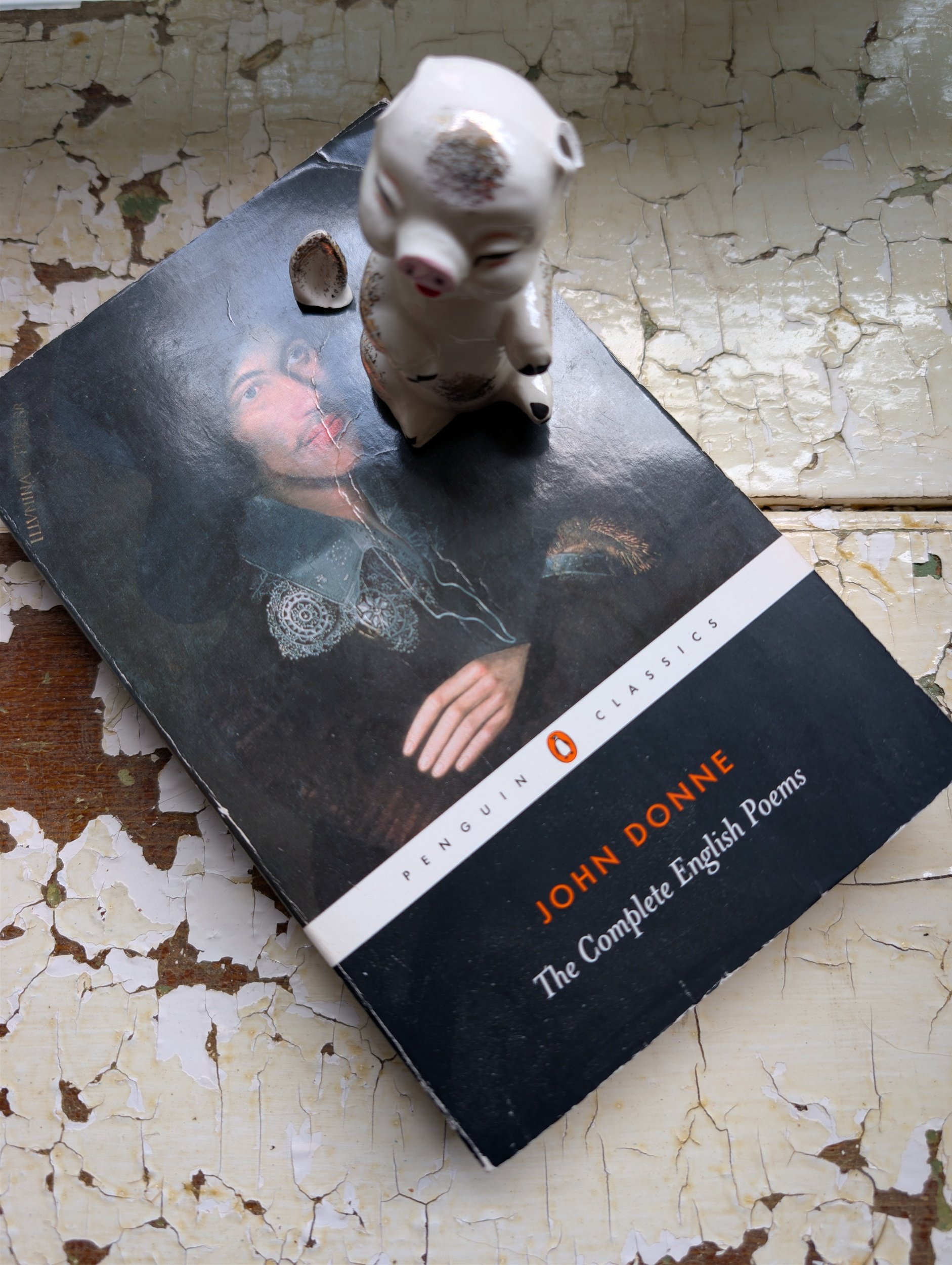
The Antisocial and Misogynistic Strain in the Verse
In his secular output, particularly the Songs and Sonnets and early elegies, Donne delights in shattering Elizabethan courtly conventions. Instead of praising a static, idealized Petrarchan idol, his speakers bargain, cajole, argue, and bully. They treat intimacy as a site of intellectual combat or cynical conquest.
Because of this aggressive subversion, modern critics frequently call out Donne’s poetry as deeply antisocial and, in particular, intensely misogynistic. Women in poems like "The Indifferent" or "Woman's Constancy" are reduced to fickle vectors of betrayal, valued only insofar as they provide a sparring partner for the speaker's ego or physical appetite. The social bond is treated with contempt; society, with its laws and expectations, is locked out of the bedroom, treated as an intrusive rabble from which the lovers must isolate themselves in a defensive, solipsistic bubble.
Conversion in Fear
This insular, anxious defensiveness did not vanish when Donne turned toward sacred writing; rather, it shifted its target. His eventual conversion and ordination within the Church of England—cemented in 1615—was fundamentally a transition forged in fear. Born into a persecuted recusant Catholic family where martyrdom and ruin were daily realities (his brother Henry died in prison for harboring a Catholic priest), Donne spent his early adulthood walking a precarious tightrope.
To survive professionally and socially in Jacobean England, aligning with the state church was practically mandatory, yet doing so meant betraying the blood-ties and faith of his ancestors. His entry into holy orders was driven as much by the desperate search for royal patronage and financial security after years of poverty as it was by a sudden spiritual calling. He took up the cassock because the alternative was worldly obliteration.
Guilt, Fear, and the Difficulty of Metaphysical Poetry
This baseline of terror and divided loyalty explains why metaphysical poetry is so famously difficult. Donne’s verse is jammed with jarring conceits—mapping cartography onto a lover’s body, comparing souls to the legs of a drafting compass, or treating religious salvation as a violent home invasion where God must batter, rather than gently open, the heart.
This difficulty was not merely an aesthetic preference; it was a symptom of a mind at war with itself. Produced out of deep-seated guilt and existential fear, his poetry weaponized complexity. By wrapping his anxieties in hyper-intellectualized, dizzying linguistic acrobatics, Donne could mask his raw panic behind a display of unmatched wit. The obscurity of the verse served as a psychological shield.
Catholic Echoes in the Writing
Given his upbringing, the question inevitably arises: did Donne's writing retain Catholic elements? The answer is a resounding yes. Even after becoming an Anglican dean, Donne's religious imagination remained profoundly shaped by his early Catholic formation.
His obsession with sin, mortification, the physical materiality of the body, and the terror of divine judgment echoes the spiritual exercises of the Counter-Reformation. In works like the Holy Sonnets, one senses the intense interiority of a medieval contemplative rather than the breezy rationalism of later English divines. He could wear the Anglican surplice, but his theological pulse beat with the haunting cadence of Rome.
The Concept of "Perfect hatred"
It is precisely this background of fear, division, and fierce loyalty that brings us to the concept of "perfect hatred" (odium perfectum). Rooted in Psalm 139:22 ("I hate them with perfect hatred; I count them mine enemies"), this theological idea represents an absolute, uncompromised rejection of evil that is paradoxically born out of total devotion to the good.
In traditional exegesis—touched upon by Augustine and echoed in early modern divinity—a "perfect hatred" targets the structural corruption of the sin while separating it from the ontological reality of the human creature. For a man like Donne, whose life was an exercise in splitting himself between old loyalties and new survival, the concept of a pure, unalloyed hatred for what is false—directed outward at a corrupt world and inward at his own fractured soul—was the ultimate spiritual benchmark.
Conclusion
Ultimately, looking across the vast, terrifying landscape of John Donne’s poetry, sermons, and hidden panics, my opinion of him settles into a strange, reciprocal symmetry: I hate him with a perfect hatred because that is how he loves me.
Read John Donne's the Flea, eat a snack with someone you love and ponder what it means to be a starving artist!
