
Stop Essentialising People and Love Where You Live: You are the Kindnesses you Perform
The Other in Diversity Equity and Inclusion Studies
In DEI studies, postcolonial theory, and gender studies, Hegel’s concept of **Otherness** and the **struggle for recognition** is used to explain how power dynamics, marginalization, and institutional inclusion work.
Here is how his ideas are applied:
* **Creating "The Other":** Dominant groups often position themselves as the neutral norm (e.g., male, white, Western) and define marginalized groups as "the Other." Thinkers like **Simone de Beauvoir** (gender) and **Frantz Fanon** (race) used Hegel to show how this dynamic denies full humanity to non-dominant groups.
* **The Need for Mutual Recognition (*Anerkennung*):** Drawing on the *Master-Slave Dialectic*, DEI frameworks argue that true inclusion requires two-way recognition. Privileged groups cannot have a healthy culture while denying validation to others; real equity requires mutual respect, not just passive tolerance or forced assimilation.
* **Institutional Alienation:** When company or school cultures are built around one dominant perspective, marginalized people experience them as a hostile, foreign "Other." Real equity transforms the institution so diverse identities belong natively.
* **Key Critique:** Scholars like Glen Coulthard argue that asking a dominant system for "recognition" keeps power in the hands of that system, rather than dismantling the power structure altogether.
**Bottom line:** In DEI, Hegel shifts the focus from a headcount of diverse people to a **rebalancing of power and recognition**. Inclusion isn't fitting "the Other" into a mold—it's changing the mold so everyone has equal standing. How do we break the mold? Stay tuned….
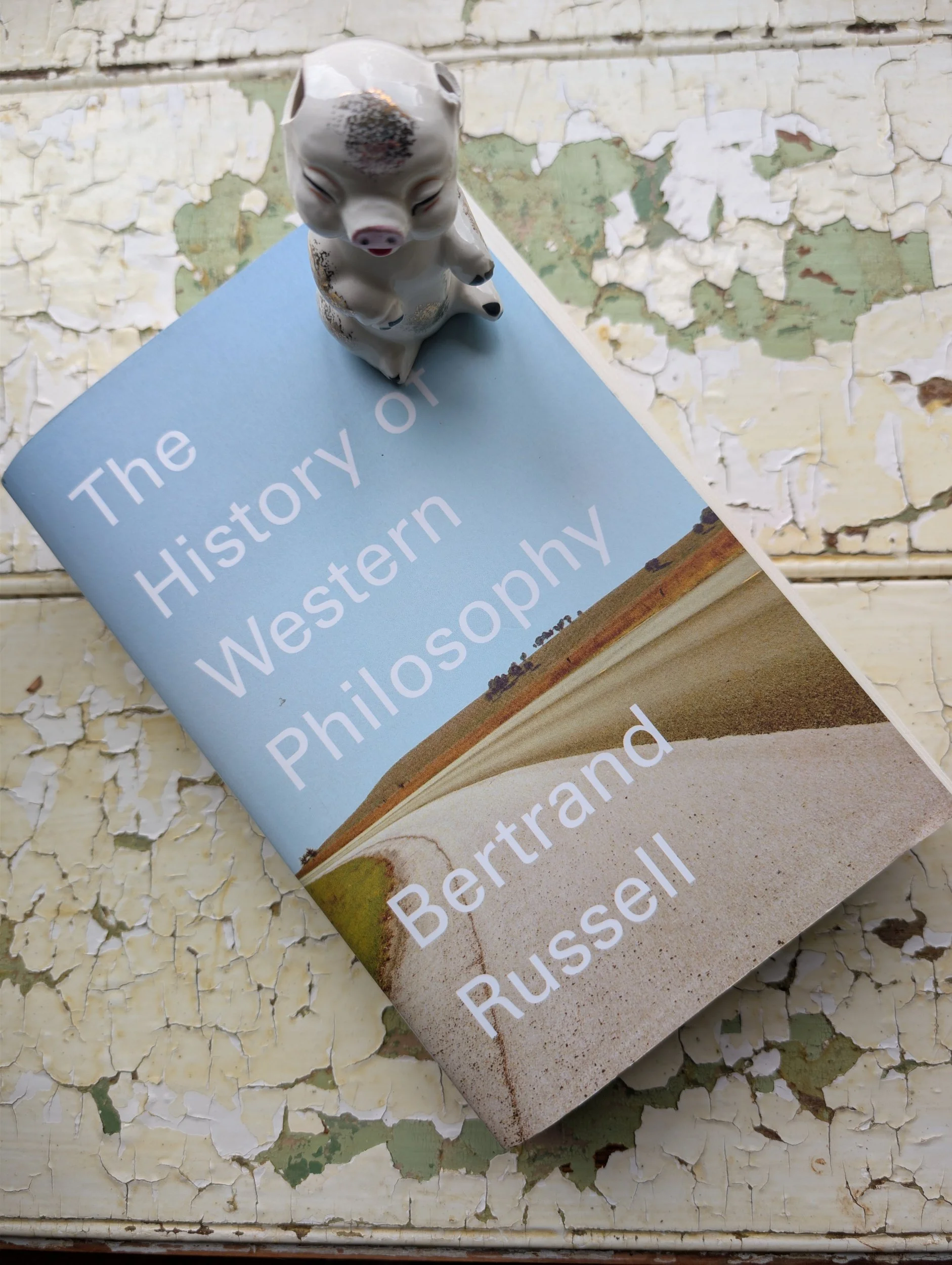
The Essential Other: Why I'm Catholic
In 2024, when I formally turned away from my religion, I wrote a paper and gave it a title that felt entirely my own: *The Essential Other*. At the time, I believed I was charting a course away from dogma, stepping outside the boundaries of faith into an objective, secular reality. What I did not realize then was that the concept of Otherness itself—the very framework I used to examine division, self, and separation—is deeply Hegelian, and fundamentally Catholic.
The theological architecture of Catholicism is built upon the dynamic of the transcendent and the immanent, the Creator and the created, and the profound journey of estrangement and reconciliation. To conceptualize an "Other" is to engage in a deeply theological exercise of recognizing a boundary and seeking to bridge it. It doesn't matter that Hegel happened to be an old white guy. By the same token it doesn't matter what I look like, where my family was once from, it doesn't matter what you look like either or where your family was once from or even what you believe, what matters is where you are right now, and how you're treating the person beside you right now. I'm only telling you this about Hegel, because even when I wasn't seeking Catholicism, it found me. In life, you don't get to choose. This isn't a pro-white standpoint, or even pro-British (because the Church of England isn't Catholic), it's simply my personal story of what I was told to do. Catholic means Universal.
I don't know what God told you to do, or what he told you to believe, I just know that for me, Catholicism came up even I avoided it. I do know that Catholicism is a beautiful religion, but that's another article.
The Architecture of Otherness in Diversity, Equity, and Inclusion
This foundational Catholic and Hegelian tension echoes far beyond the sanctuary. If we examine the modern academic and institutional fields of Diversity, Equity, and Inclusion (DEI), we find that most core literature and frameworks are constructed precisely on this concept of Otherness.
DEI discourse continually grapples with the insider and the outsider, the dominant culture and the marginalized Other, striving for a synthesis of reconciliation. Yet, this entire machinery of critique, equity, and rights is not a rejection of Western thought; rather, it is a direct product of it.
Western Individualism, Political Identity, and Geography
The very concepts of individual rights, democratic participation, and systemic critique presuppose a political body rooted in Western individualism. To argue for equity, to demand recognition, and to assert individual autonomy are actions born from the Enlightenment tradition.
Consider the trajectory of cultural theorist Edward Said. Despite his profound critiques of Western imperialism and his Palestinian heritage, Said spent the vast majority of his professional and intellectual life as an American. His formidable ideology, his mode of critique, and his insistence on intellectual agency were fundamentally underpinned by Western individualism. It doesn't matter what Said looked like, in his thought he shared something in common with Hegel. I'm not saying that diversity isn't to be respected, I'm saying the opposite. We need to consider what it means to belong to the place where we live. What I'm wondering is why were arguing. And yes EVERY PERSON deserves safety in their home, and economic opportunities, and at the bare minimum a little food.
### The Universal Geography of Belonging
This principle extends to political identity as a whole: in my view, **people who live in the West are Western**, regardless of their cultural heritage, ancestral roots, or physical appearance. Political identity is forged by citizenship, participation, and the civic structures of where one resides. By this same token, the Indigenous peoples of North America have always been Western simply because that is where they live—their homeland is the West, anchoring them intrinsically to its political and geographical reality.
### Love Where You Live
Ultimately, grand theories of Otherness and political structures matter very little if we lose sight of where our feet are planted. Every person in the world deserves safety in their own homes. True peace is not manufactured through ideological purity or abstract categorization; it is created by loving the place where you live and engaging in the tangible, daily practices of human life:
* Cooking and sharing meals. Engaging in activities for human health.
* Participating in visceral aesthetics and creative building
* Caring for the earth alongside the people around you, regardless of where they once came from or what they look like
**People are a series of actions they perform, not just who they say they are.** Kindness shown to the earth is a kindness to other human beings. Kindness to other human beings is the exact path to feeling safe at home.
The words people use are not what matters because people say dumb stuff, but that's a future article. What matters is whether they disable you physically, economically. What matters is the human face.
Offer the human next to you a snack, because they're human.
Home is where you are. Love where you live.
