
The End of Plagiarism: AI, Exercise and the Aeneid
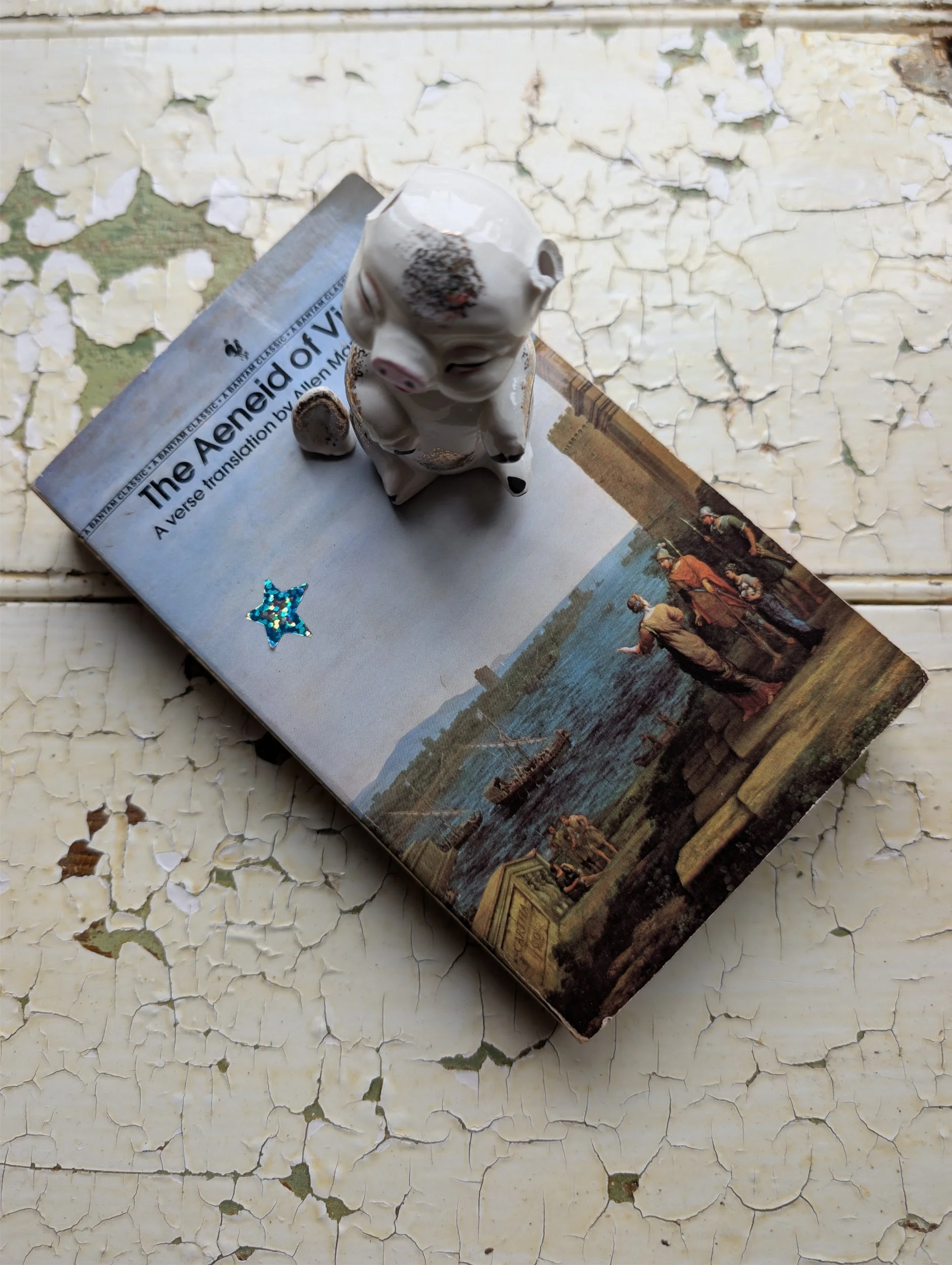
The relationship between Virgil's Aeneid and Homer’s Iliad reveals how classical writers viewed creative "borrowing." Long before modern anxieties about generative AI, Romans practiced imitatio—using earlier texts as raw material to forge something new.
To understand how artificial intelligence, human creation, and learning intersect today, food offers an illuminating parallel: culinary traditions are the observably changing form of mimesis, where every single iteration is uniquely different.
Culinary Mimesis: The Recipe as Tradition
Think of a classic recipe—say, a traditional Bolognese or a foundational sourdough loaf. A chef doesn't invent the concept of pasta or fermentation from scratch; they borrow the blueprint from generations past.
* The Ancient Blueprint: Just as Virgil consciously rewrote Homer’s plots, a home cook or chef follows a foundational template passed down through culture.
* The Living Iteration: Unlike a digital file that can be copied-and-pasted identically millions of times by an algorithm, a recipe can never be purely replicated. Every time a cook makes a dish, the result is altered by variables: the humidity in the air, the exact heat of the stove, the subtle variance of local ingredients, and the intuition of the cook
AI’s Hollow Mimesis: Microwave Dinners vs. Cooking
This dynamic highlights the difference between AI generation and human effort.
When a student uses an AI to write an essay, they engage in hollow mimesis—the intellectual equivalent of a mass-produced microwave meal. It has the outward appearance of nourishment, but no labor or life went into its creation.
* Why it’s less healthy: Outsourcing our cognitive diet to AI starves our mental muscles. Just as physical fitness requires lifting weights, cognitive fitness requires wrestling with ideas.
* Why it’s still helpful: Just as a food processor or a kitchen timer speeds up prep work, AI is a useful tool to organize thoughts or draft outlines—provided we don't let it consume the actual learning process for us.
The Human as the Machine That Creates
The word machine originally meant a tool designed to make work easier. But in the realm of creation, the human is the ultimate machine.
Silicon-based AI is a machine that calculates probabilities and rearranges existing data—much like a food factory processing raw ingredients based on a formula. It can recombine the past, but it cannot taste, hunger, or experience. It cannot create because creativity is the activity of the human soul.
AI in its foundations operates as a line of best fit, a human mind does not. AI may be “smarter” in it's cold calculation but it will never be truly original, it is only guided by human creativity, and to be honest, its plagiarism of human creativity is going to wipe out the concept of plagiarism altogether.
The human, however, is a biological engine of lived experience, emotion, and mortality. When a human writes an essay, crafts a poem, or adapts an ancient myth, they are infusing the work with subjective meaning. We are the creators who give culture its flavor.
What Is an Exercise?
This brings us to the purpose of an exercise (or exercise)—whether it is memorizing lines of Homer, sitting for an oral exam, writing an essay by hand–or even lifting weights.
An exercise is not meant to produce a finished product; it is meant to train the producer.
In cooking, the goal of making a difficult dish isn't just the meal on the plate; the real product is the chef's developing palate, knife skills, and intuition. Chefs and cooking will always exist because cooking itself is a healthy activity for the human body.
As education shifts back toward oral defenses and internalized knowledge, and learning by rote it embraces a timeless truth: machines can simulate the recipe, but only human physical work can feed the mind.
