The philosophical concept of "the Other" is intrinsically linked to human physiology. Without the five senses, a conscious mind would exist in a void, unable to differentiate between itself and anything else. The senses act as the physical boundary and the bridge between the internal mind (the Self) and external reality.
Tracing how the five senses inevitably lead to the concept of the Other follows a clear, logical progression in philosophy, particularly in phenomenology and existentialism.
1. The Senses Establish the Boundary (Self vs. Not-Self)
Before a philosopher can conceptualize "the Other" (another consciousness), they must first realize that an external world exists. The five senses are the mechanisms of this realization.
* Touch requires a surface of resistance; you cannot feel an object unless it pushes back against your skin, proving it is not you.
* Sight and Hearing require distance. A sound wave must travel to the ear; light must bounce off an object to hit the retina.
Through these sensory inputs, the mind concludes: I am contained within a physical boundary. There is a world outside of me. This creates the foundational philosophical split between the Subject (the mind doing the sensing) and the Object (the things being sensed).
2. The Sensory Anomaly (Sensing a Sensor)
As the Self uses its senses to navigate the external world, it categorizes everything as Objects: a rock is hard, a flower smells sweet, a river sounds loud. But eventually, the Self's senses encounter an anomaly: a human body.
Through sight, you observe this body moving with purpose. Through hearing, you perceive it emitting structured language rather than random noise. Through touch, you feel it reacting to you—flinching or reciprocating. Your senses inform you that this specific "Object" possesses the exact same sensory apparatus that you do. It is not just an object; it is a center of perception.
3. Sartre and "The Look" (Becoming the Object)
The French existentialist Jean-Paul Sartre argued that the true realization of the Other happens through a specific sensory event: sight.
Imagine you are looking through a keyhole, completely absorbed in spying on a room. You are pure Subject, and everything you see is your Object. Suddenly, you hear a floorboard creak behind you. You turn and see another person looking at you.
In that sensory exchange, a violent philosophical shift occurs. By seeing the Other's eyes looking at you, you realize you are an object in their visual field. You are suddenly aware of your own physical presence as a thing being perceived. The Other is no longer just another object in your world; they are a competing Subject who has the power to perceive, judge, and objectify you.
4. Merleau-Ponty and the Flesh (The Reversibility of Touch)
Maurice Merleau-Ponty, a phenomenologist, rooted the concept of the Other deeply in the sense of touch. He pointed out a unique physical phenomenon: when your right hand touches your left hand, your left hand simultaneously feels your right hand touching it. You are at once the one touching (Subject) and the one being touched (Object).
When you shake hands with another person, your senses experience this same duality across two bodies. You feel their skin, but you also feel them feeling you. This physical, sensory entanglement proves that the Other is a conscious subject sharing a lived, tactile reality with you.
5. Levinas and the Ethical Demand of "The Face"
For Emmanuel Levinas, the culmination of sensing the Other is ethical. Levinas argued that when we visually apprehend the physical "Face" of the Other, we are seeing naked vulnerability.
The senses do not just transmit data; they transmit a moral command. When you see the Other's eyes or hear a cry of pain, your senses are bombarded with the reality of an inner life that you cannot access, yet are responsible for not harming. The Other is not an abstract concept; it is a physical, sensory presence that demands you recognize its humanity.
The Progression Summary
The natural progression flows directly from biology to ontology:
* Biology: I have senses.
* Epistemology: My senses tell me things exist outside my mind.
* Ontology: My senses detect an entity that also has senses.
* Intersubjectivity: If they have senses, they perceive me. We are two Subjects sharing one reality. This is the birth of the Other.
In an isolated dyad—a universe of only two people—the concept of madness cannot exist because there is no mechanism to establish a definitive reality. If Person A hears a voice that Person B does not, they reach a purely symmetrical epistemic stalemate. Person A believes Person B is deaf to the truth, while Person B believes Person A is hallucinating. Because both possess equal sensory authority, their conflicting realities merely orbit one another. In a group of two, divergent perception is simply a disagreement between two Subjects; there is no mathematical weight to elevate one subjective experience into a universal, objective standard.
The introduction of a third person fundamentally shatters this symmetry and gives birth to the concept of the norm. If Person C enters the room and corroborates Person B’s experience, the balance of power instantly shifts. The shared perception of B and C coalesces into "objective" reality through the power of consensus. Person A is outvoted two-to-one. The triad provides the minimum architectural requirement for a society because it creates a majority. Consequently, Person A is no longer an equal but opposing Subject; they are mathematically isolated. Their differing perception is stripped of its authority and reclassified as an aberration.
This triangulated dynamic reveals that madness is not purely a static, isolated defect within a single mind, but rather a profound relational friction. The identification of mental illness functions as a social dynamic where a group enforces the boundaries of a shared reality. Madness is the condition of being mathematically exiled from the sensory consensus. It requires the presence of at least three people because it takes two to agree on what is real, and one to be branded as the deviant Other who has lost the plot of the shared human experience.
The philosophical concept of the Other shifts from a neutral encounter between two minds into a diagnostic hierarchy the moment number—specifically, the statistical majority—is introduced. While the five senses confirm that an external reality exists, it is the shared sensory consensus of the majority that dictates what that reality is. If one individual perceives a voice in an empty room, but ten others in the same room hear nothing, the single individual is outvoted. Number establishes a baseline of objective "normalcy" through consensus. Without the weight of numbers to establish this baseline, a differing perception is merely a unique subjective experience; it is the numerical imbalance that transforms a divergent thinker into the ultimate societal Other: the mentally ill.
Psychiatry and behavioral sciences rely entirely on numerical frameworks to categorize and pathologize this Otherness. Systems like the Diagnostic and Statistical Manual of Mental Disorders (DSM) operate fundamentally on quantification. A person is categorized as mentally ill because their behaviors, sensory experiences, or emotional states deviate from the statistical bell curve of the human population. Furthermore, the diagnosis itself is an exercise in counting: a patient must exhibit a specific number of criteria (e.g., five out of nine symptoms) over a specific number of weeks to be labeled disordered. Mental illness, in this clinical sense, requires number to measure exactly how far the Other has drifted from the mathematical center of human behavior.
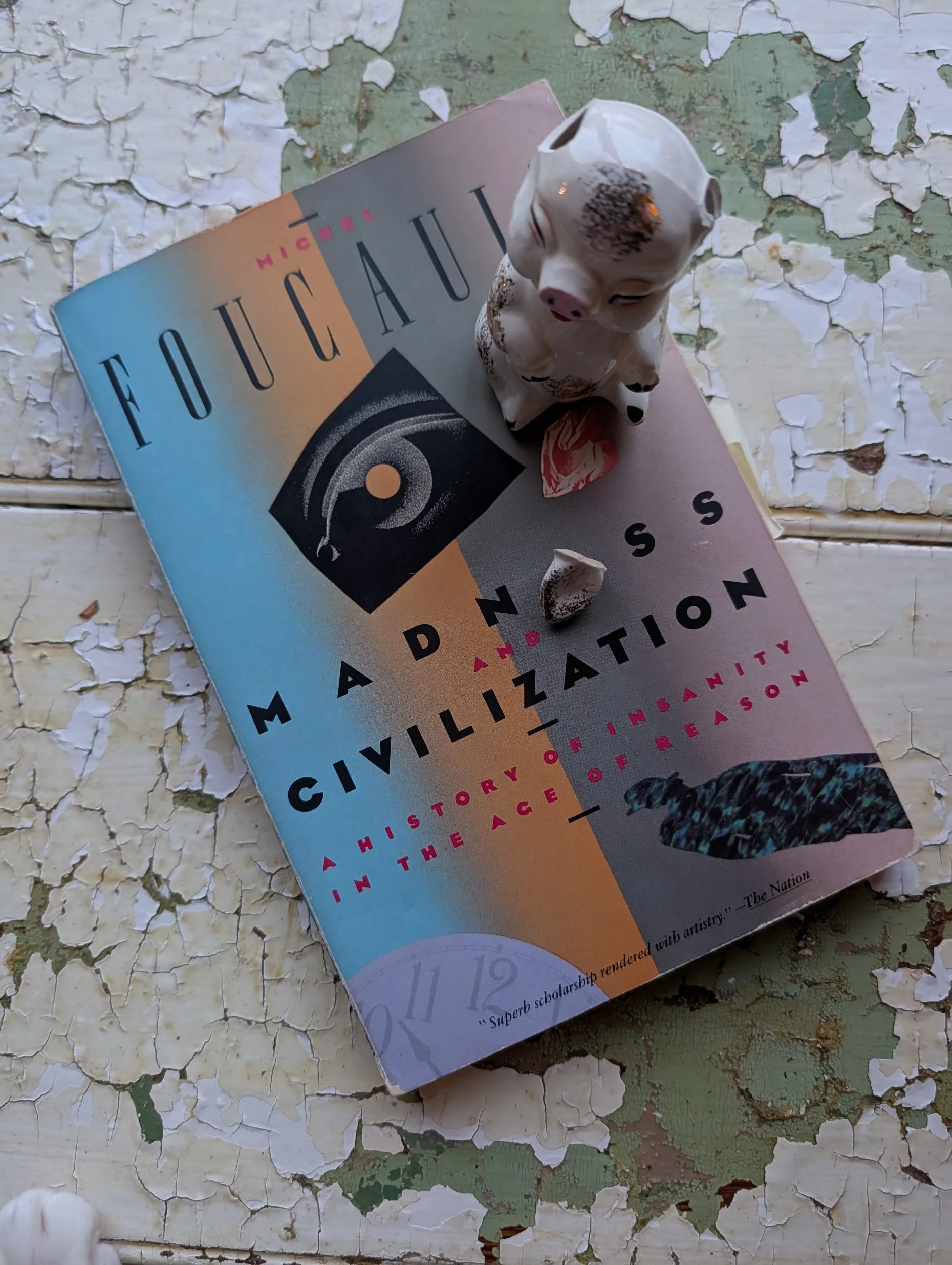
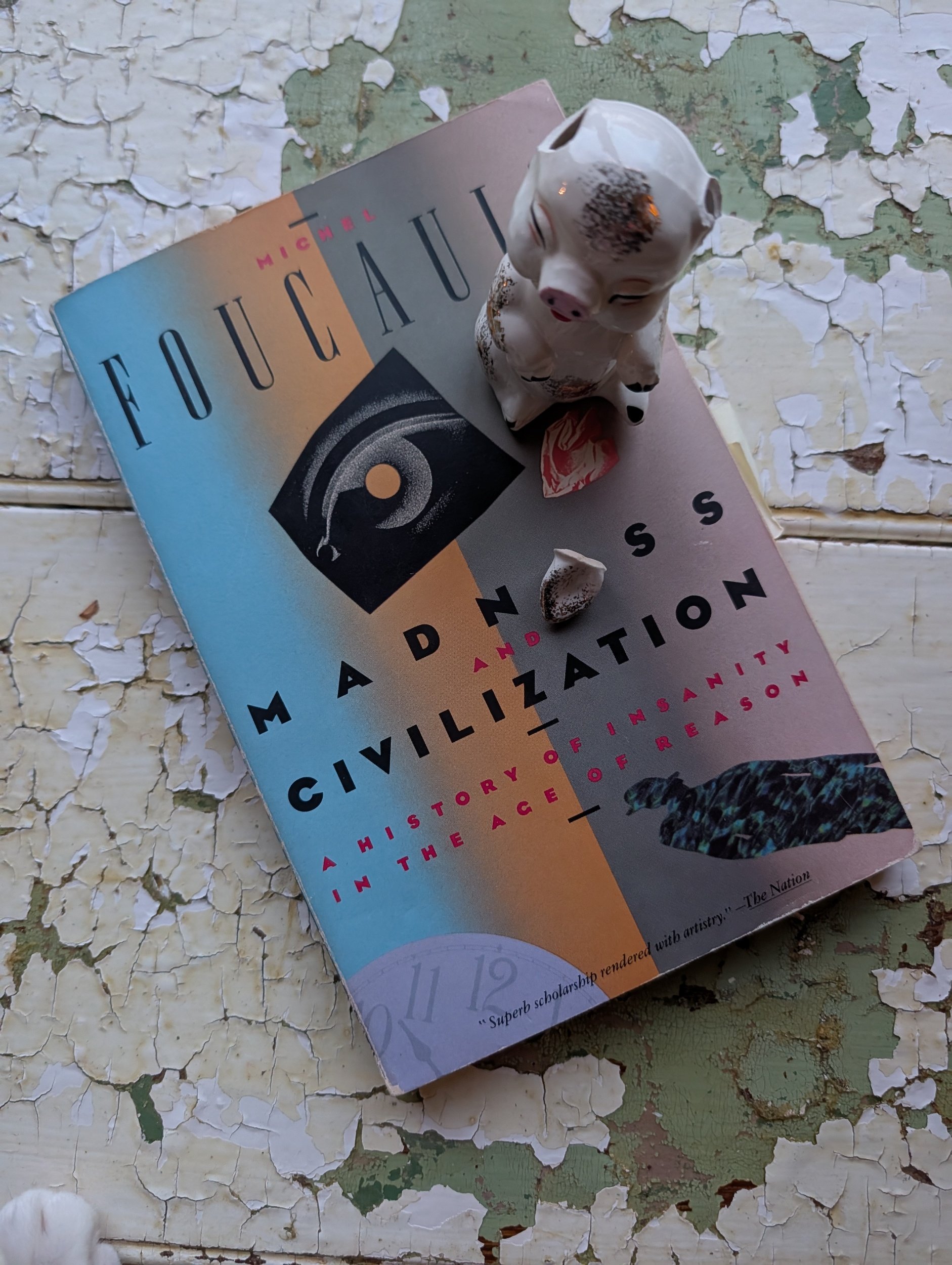
This numerical alienation effectively weaponizes the concept of the Other. As philosopher Michel Foucault argued in his analyses of madness and civilization, society constructs "madness" through a mechanism of exclusion, where the rational majority (the many) defines itself by institutionalizing and separating the irrational (the few). The mentally ill person becomes the profound Other because their internal reality cannot be corroborated by the crowd. It is the sheer weight of numbers that labels the divergent Subject as broken, using statistics to pathologize their Otherness and protect the agreed-upon sensory consensus of the whole.
Within the triad, the mechanism that enforces the norm is not formal diagnosis, but the informal, relentless engine of gossip. Gossip is the social currency by which a shared reality is negotiated, policed, and maintained. When a person exhibits strange behavior, the surrounding community uses gossip as a real-time, collective diagnostic tool. It is through whispers, shared glances, and behind-closed-doors conversations that a group evaluates a divergence from the norm. Gossip transforms an individual’s private actions into a public narrative, shifting mental illness from an internal experience into a social judgment.
This gossip engine explains the stark asymmetry in how identical strange behaviors are treated, determining who is exiled and who is accommodated. Whether a person is ostracized depends entirely on their existing social capital and the narrative the community chooses to construct around them. If a prominent, well-connected, or wealthy individual acts bizarrely, the gossip engine often functions as a shock absorber. The community contextualizes the divergence—labeling the person as "eccentric," "passionate," or simply "exhausted." The storytelling apparatus of the group protects them, padding their actions with grace because the group values their continued integration.
Conversely, when an individual lacks that social capital or is already on the periphery, the gossip engine accelerates their exile. Without a protective narrative or network of allies to soften their strange behavior, the community quickly frames the divergence as an inherent danger or an unredeemable flaw. The whispers shift from sympathetic rationalizations to cautionary tales. In this way, ostracization is a dynamic social process rather than a medical inevitability. Madness is determined less by the specific breaking of a mind, and more by the breaking of a social contract, enforced by a crowd that decides who receives the benefit of context and who is cast out as the Other.
When a community defaults to disabling rather than uplifting its members, social belonging transforms from an inherent right into a precarious, scarce resource. In an environment that does not offer a safety net of grace and support, every individual is acutely aware that they could be the next one cast out. Consequently, finger-pointing becomes a defensive survival mechanism. By actively identifying and condemning the strange behavior of someone else, an individual publicly aligns themselves with the safety of the normative majority. Pointing the finger is less about accurately diagnosing the Other, and more about loudly signaling, "I am not them; I am one of you."
This culture of disablement supercharges the gossip engine, turning it from a tool of social negotiation into a predatory system of scapegoating. It requires immense communal energy, empathy, and resources to uplift someone who is struggling or acting divergently. It is far easier, and more instantly unifying, for a group to bond over a shared rejection. By systematically disabling a vulnerable person—stripping them of their credibility, isolating them, and whispering about their unfitness—the group artificially strengthens its own cohesion. The designated "mad" person becomes a structural necessity for the community, a lightning rod that absorbs the group's collective anxieties and distracts from their own internal dysfunctions.
The most tragic outcome of this dynamic is that the act of finger-pointing creates a self-fulfilling prophecy of pathology. When a person is denied support and instead subjected to the relentless pressure of being watched, judged, and socially disabled, their mental state naturally deteriorates. The profound stress of ostracization breeds further anxiety, paranoia, and erratic behavior. The community then points to this worsened state as objective proof that their initial judgment was correct, entirely ignoring the fact that it was their refusal to uplift the individual that pushed them past the breaking point.
If we look at this through a traditional, black-and-white lens, society immediately points the finger at the man swinging the bat. He broke the ultimate social rule by committing physical violence, and the group—represented by the legal system—steps in to remove him. He is the one who visibly "snapped," lost control of his mind, and is labeled the dangerous, unstable element. But when we understand mental illness and human dysfunction as a dynamic, the reality of the situation completely flips.
The man who got hit actually orchestrated the entire collapse. To willingly invite a brutal physical injury to the head, and to feel happiness and satisfaction through that pain simply because it ruined another person's life, represents a profound departure from basic human survival instincts. His dysfunction wasn't a visible hallucination or a manic episode; it was his chilling ability to weaponize the social contract. He understood the rules of the group (the law) and relentlessly pushed another human being until they broke those rules. He used the dynamic of the triad—himself, his target, and the justice system—to destroy someone, treating his own severe physical injury as a victorious cost of doing business.
So, who is crazy in this situation? The madness doesn't belong exclusively to one brain; it is the toxic, invisible gravity between them. One man lost his emotional regulation and his freedom, but the other man sacrificed his own physical safety just to win a sadistic game. This anecdote perfectly captures the danger of treating mental illness as an isolated trait rather than a social dynamic. The law and society usually only punish the final, visible swing of the bat. The person who knows how to invisibly pull the strings and provoke the breakdown is protected by the group as the "victim," while the one who visibly cracks absorbs all the pathology and takes the fall.
Every individual navigates the social world using a unique toolkit built for their own survival, meaning we all process reality through vastly different emotional filters. It takes a sharp degree of self-awareness to recognize that what you consider a virtue—directness and honesty—can function as a trap for someone else.
When you value raw truth, unflinching honesty feels like the most honorable way to engage. You aren't playing games, hiding behind the gossip engine, or setting invisible tripwires. But in the fragile ecosystem of human relationships, most people survive by relying on a complex web of polite fictions, gentle ambiguities, and social padding. When you bypass all of that and deliver the blunt truth, you aren't just handing them information; you are stripping away their social armor.
This is precisely why hyper-directness can mirror the disabling effects of passive-aggression, despite being its exact opposite in form. A passive-aggressive person disables their target by making the rules invisible, leaving the other person grasping at shadows and questioning their own sanity. A brutally direct person disables their target by turning on a spotlight so blindingly bright that the other person freezes. In both scenarios, the target is left without a way to gracefully maneuver.
By refusing to participate in the typical dance of social softening, your honesty corners them. If they require time, nuance, or emotional cushioning to process reality, your directness overwhelms their defenses, effectively paralyzing their ability to respond as an equal.
It ultimately comes down to who dictates the terms of reality. The manipulator controls the dynamic through plausible deniability. Hyper-directness controls the dynamic through undeniable exposure. You establish the baseline of reality so forcefully that anyone who cannot match your emotional velocity is immediately outmatched. The dynamic becomes disabling not because you lied to them or swung a bat, but because you forced them to operate in an atmosphere where they cannot breathe.
A clinical diagnosis functions as an epistemological wall that instantly revokes a person’s status as a reliable narrator of their own life. In a healthy social dynamic, a conversation is a negotiation between two equal Subjects who trust that the other possesses a valid, internal reality. When a diagnosis is applied, that equality collapses. The labeled individual’s words are no longer processed as arguments, valid frustrations, or profound insights; they are filtered entirely as symptoms. Communication is shut down because the normative majority stops listening to the meaning of what the person is saying, and instead only observes that they are saying it as a manifestation of their disease.
This silencing transforms the individual from a human being with a complex interior life into a pure clinical spectacle. They become an Object to be managed, observed, and treated. If a labeled person expresses intense anger at an injustice, the group does not investigate the injustice; they note a "mood swing." If they express deep existential grief, they are not engaged as a philosopher; they are medicated for "clinical depression." Their rich, subjective interiority is flattened into a checklist of behaviors. Society watches them from the outside, treating their lived experience as a theatrical display of pathology while permanently locking them out of the meaning-making process.
The relationship degrades from a dialogue into a monologue of authority. A true conversation requires the vulnerability of admitting the other person might be right. A diagnosis, however, pre-determines that the labeled person’s reality is inherently broken. The medical and social establishment speaks at them and about them, discussing their fate in the third person even when they are sitting in the room. The "illness" becomes a script written and spoken by the culture, echoing over the silenced voice of the patient who is no longer permitted to hold the microphone.
This is the exact mechanism that reveals why mental illness is a cultural construct. It is not that profound psychological suffering, trauma, or altered brain states do not exist—they are very real. But the structure of mental illness—the stripping of social authority, the exile from the communal conversation, and the transformation of a person into a spectacle—is entirely a social invention. Society creates the cultural reality of "mental illness" by deciding exactly when to stop listening. It is a boundary drawn by the majority to determine whose reality is allowed to participate in the human conversation, and whose reality is permanently muted.
In Korean culture, the word nam (남) refers to the stranger, the outsider, or the profound Other. Yet, the traditional philosophy of social relations does not leave nam in a state of permanent exile. Through the practice of radical hospitality and the cultivation of jeong (정)—a deep, empathetic, unspoken bond—the boundary between the self and the stranger becomes permeable. When you invite nam into your space and share a meal, they cease to be a spectacle to be observed or a threat to be managed. They are brought into the fold of uri (우리), meaning "we" or "us." This shifts the social dynamic entirely: instead of pointing a finger at the divergent individual to protect the group, the group expands its physical and emotional boundaries to absorb and protect the individual.
This same profound architectural shift is visible in the Sikh tradition of Langar, the free community kitchen. In a Langar, everyone sits together on the floor at the exact same level, regardless of wealth, social status, or mental state. There is no diagnosis required to receive a warm meal, and no gossip engine determining who is worthy of a seat. The culinary act here is elevated into the ultimate expression of human equality. Serving and sharing thoughtful food across a communal spac