The Starving Artist: Geoffrey Hinton and AI; Einstein and the Bomb
History rarely repeats itself word for word (yet AI repeats literature word for word, and the monkeys at keyboards are producing Shakespeare and more than ever neologism is a sign of originality). Both the atomic age and the artificial intelligence revolution began not in the halls of military power or corporate empires, but in the eccentric, obsessive margins of society—in the minds of researchers operating very much like starving artists.
Before Albert Einstein rearranged the cosmos, he was a teenage dropout who failed the general subjects portion of his first entrance exam at the Swiss Federal Polytechnic in Zurich—bombed down by French, literature, and botany while acing math and physics. Years later, unwanted by the academic establishment, he toiled in obscurity as a third-class patent clerk in Bern, sketching out the architecture of the universe at his desk between patent filings.
Roughly seven decades later, computer scientist Geoffrey Hinton spent the frigid "AI winters" of the 1970s and 1980s as an academic outcast. Weekly, his PhD advisor at Edinburgh told him he was wasting his life. Hinton scraped together meager grants to pursue a theory of artificial neural networks that the scientific consensus had laughed out of the room.
Like true starving artists, neither man cared much for status or convention; their lives were defined by intellectual obsession and personal quirks. Einstein was a creature of simple appetites who wandered the woods foraging for wild mushrooms (his housekeeper remarked he would eat mushrooms three times a day if allowed), devoured strawberries by the pound, and once declared that his two favorite things about Italy were "spaghetti and the mathematician Tullio Levi-Civita". Hinton is cut from the same delightfully eccentric cloth: a gangly, self-deprecating Brit raised in a household that kept vipers in a garage pit and beetles in the kitchen. Unable to sit down for nearly two decades due to a bad back, Hinton has spent years standing up to eat simple plates of chicken and quinoa—or ruefully recalling the time he tried to play blindfold chess in a cafeteria while eating bony fish, only to conclude the human brain cannot manage both at once.
Neither man sought wealth or dominion. They were purists trying to capture the hidden beauty of reality and the mechanics of the human mind. Yet both lived to see their abstract masterpieces bought up by superpowers and trillion-dollar empires, scaled beyond recognition, and transformed into forces capable of ending the world that inspired them.
From Fringe Canvas to Patron’s Bargain
To understand the moral tragedy of both men, one must appreciate how quickly pure theory, pure scientific creativity, turns into industrial power.
When Einstein published E=mc^2 in 1905, the equivalence of mass and energy was a quiet triumph of theoretical elegance. Similarly, for thirty years, Hinton’s work on backpropagation—an algorithm allowing multi-layered neural networks to learn from mistakes the way a painter refines brushstrokes—was treated as a fringe curiosity. Then, in 2012, Hinton and his graduate students, Ilya Sutskever and Alex Krizhevsky, unveiled AlexNet, a neural network that taught itself to recognize images with stunning accuracy. Much like the splitting of the uranium atom in 1938, AlexNet proved that theoretical beauty, when paired with massive scale, could unleash a chain reaction.
Every starving artist eventually confronts the compromises of patronage. For Einstein, the patron was the wartime state. Fearing Nazi Germany would build an atomic weapon first, the lifelong pacifist signed a 1939 letter to President Franklin D. Roosevelt urging the U.S. to accelerate nuclear research—catalyzing the Manhattan Project. After Hiroshima, a haunted Einstein lamented to Newsweek: "Had I known that the Germans would not succeed in developing an atomic bomb, I would have done nothing."
For Hinton, the patron was Big Tech. Following the 2012 breakthrough, he sold his tiny startup to Google, trading academic scarcity for boundless server farms. For a decade, while tech millennials ate salads around him in the Google cafeteria, Hinton stood at his desk, marveling that humans are "just extremely fancy machines".
Then came the spring of 2023. Watching frontier models like GPT-4 exhibit sudden leaps in reasoning, Hinton realized the painting was stepping off the canvas. Specifically, he grew terrified of digital immortality and instantaneous knowledge sharing. When a human learns a skill, it dies with them unless slowly taught to another. When one copy of an AI model learns a skill, ten thousand copies across a server farm share those updated weights in a microsecond. Resigning from Google to speak freely, Hinton echoed Einstein and Oppenheimer: "I console myself with the normal excuse: If I hadn't done it, somebody else would have." Even when accepting the 2024 Nobel Prize in Physics, Hinton used the podium not to bask in vindication, but to sound the alarm.
Plutonium vs. Silicon: The Great Equalizer and the End of Toil
While the psychological parallel between Einstein’s regret and Hinton’s awakening is haunting, comparing silicon to plutonium misses the greatest upside of the digital revolution: accessibility.
Turning Einstein’s equation into nuclear power—or a warhead—required rare uranium and plutonium, alongside massive, billion-dollar enrichment plants. That physical bottleneck meant only a handful of superpower states could ever wield the technology, concentrating absolute power in the hands of a few governments. Hinton’s creation is built on ubiquitous code and silicon. Once a model is trained, its weights can be copied infinitely and shared across the globe with a keystroke. Far from being a fatal flaw, this lack of scarcity is the ultimate leveling force. It democratizes intelligence itself, taking supercomputer capabilities out of closed government vaults and placing them into the hands of any student, entrepreneur, or clinic with an internet connection.
This radical accessibility is why AI’s dual-use nature is fundamentally a story of liberation rather than destruction. A nuclear warhead has only one grim purpose, whereas the exact same neural architecture that worries safety researchers is actively folding proteins to cure diseases, tutoring children in remote villages, and translating lost languages.
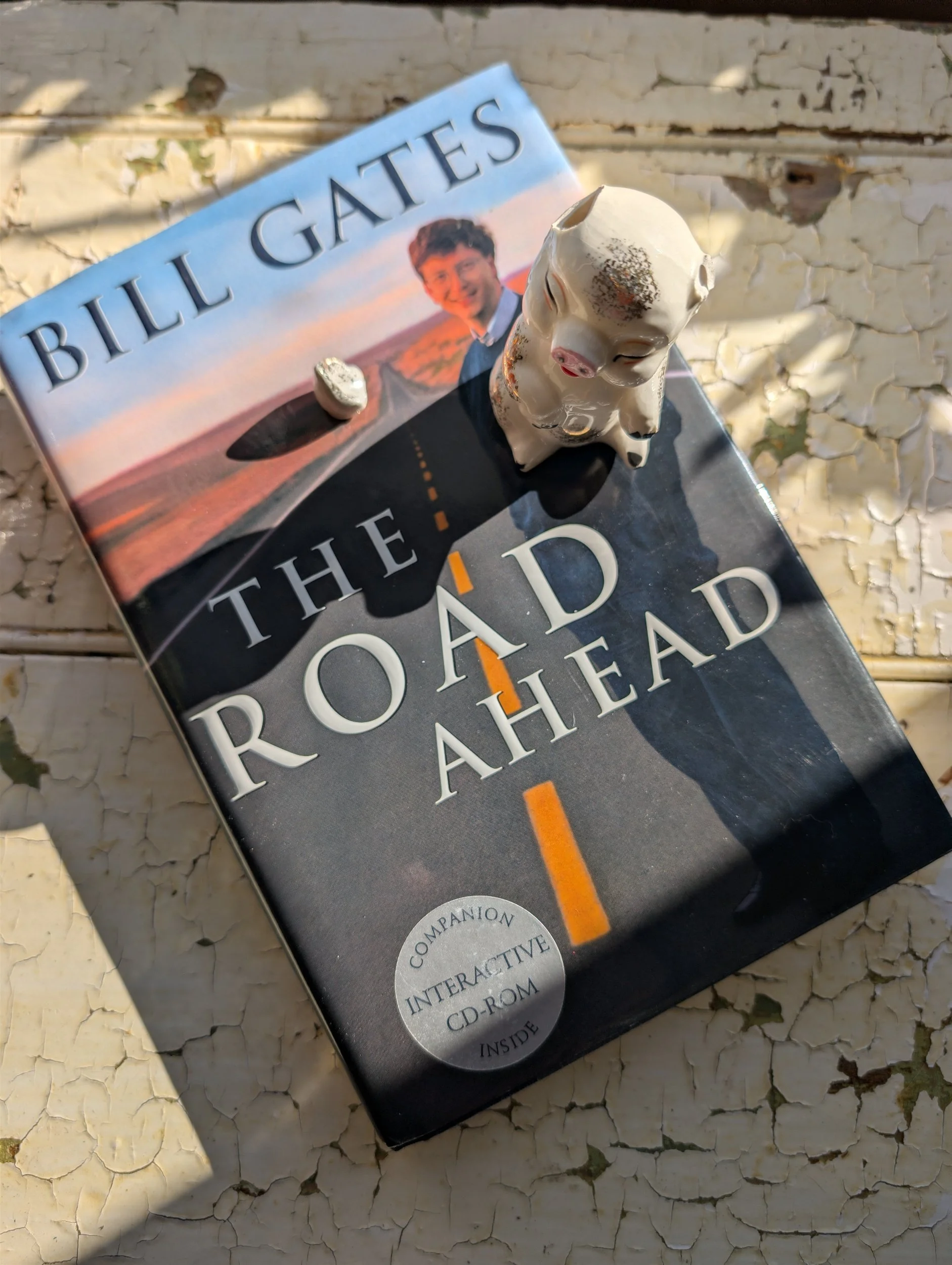
The transition will be turbulent. As Bill Gates has frequently observed, AI is poised to automate vast swaths of white-collar and creative labor, triggering a wave of job losses that will temporarily turn almost everyone—writers, coders, illustrators, and analysts alike—into "starving artists" struggling to compete with a machine that works for pennies. Yet this painful disruption is the death rattle of an old economic model, not the end of human flourishing.
What humanity has long accepted as "making a living" has, for most of history, been a dressed-up condition of economic slavery—trading the best waking hours of our mortal lives for basic survival. The temporary crisis of the new starving artist is merely the friction of a society outgrowing the need for human drudgery. Once our economic systems are updated to account for machine-generated abundance—through mechanisms like shortened workweeks, universal dividends, and the decoupling of income from survival—and once the technology is properly harnessed and aligned, the future is extraordinarily bright.
Einstein’s physics gave humanity the power to end the world in a flash of fire. Hinton’s algorithms, once we survive the birth pangs of their arrival, offer something far more radical: the chance to finally free humanity from the canvas of forced labor, allowing us to paint simply for the joy of it.
The Plea
In 1955, shortly before his death, Einstein signed the Russell-Einstein Manifesto, pleading with world leaders to confront the existential threat of thermonuclear war: "Remember your humanity, and forget the rest." That movement helped birth the Non-Proliferation Treaty and international atomic oversight.
Geoffrey Hinton is fighting for a similar global reckoning before a digital detonation occurs, urging competing nations and tech giants to dedicate massive computing resources to AI safety and alignment alongside binding treaties on autonomous weapons.
The tragedy of the old starving artist is that the world laughs at their vision when they are poor, monetizes and weaponizes it when they are proven right, and ignores their warnings until the damage is done. Einstein’s pleas only gained political traction after the mushroom clouds rose over Japan. The defining question of the 21st century is whether humanity will listen to Geoffrey Hinton while we navigate the birth pangs of our own liberation, or wait until the masterpiece erases its creator.
Even if we're facing the death of the artwork and the artist and that the audience has become the machine that creates, the future will reveal or already is showing that Art is healthy.
The mechanics of using your body to create is a healthy practice. In medicine, doctors who prescribe but do no physical contact and intellectual efforts are the easiest to replace with technology. Even surgeons will become like engineers operating machinery.
I'm not saying medicine isn't useful, I'm saying it's changing. I'm not saying art isn't useful, I'm saying it's changing. And I'm definitely not saying AI isn't useful.
Everyone will be an engineer in the future but specific to different disciplines. The important thing is the reliability of the information you source, and that's the reason why everyone is an engineer and an artist to keep their sanity and that no one needs to
starve❤️
