
You’re Loved Extravagantly, Beyond All Reason
The third reason why I'm Catholic: Descartes and the Exclusion of Madness revisited.
When Descartes sat down to write his *Meditations*, his goal was to find a foundation for knowledge that was absolutely certain. To do this, he employed "methodological doubt," stripping away everything that could possibly be false.
He famously questioned his senses (which sometimes deceive us) and even the reality of the physical world (which could be a dream). However, there was one category of experience Descartes famously brushed aside: **madness.**
In his First Meditation, Descartes considers the possibility that he might be insane– But he quickly dismisses the thought:
“And how could I deny that these hands and this body belong to me, unless perhaps I were to assimilate myself to those insane persons whose minds are so troubled and clouded by the black vapours of bile that they constantly assert that they are kings when they are very poor; that they are wearing gold and purple, when they are quite naked; or who imagine that they are pitchers or who have a body of glass. But these are madmen, and I would not be less extravagant if I were to follow their example” (Quoted from the Sutcliffe translation of 1968)
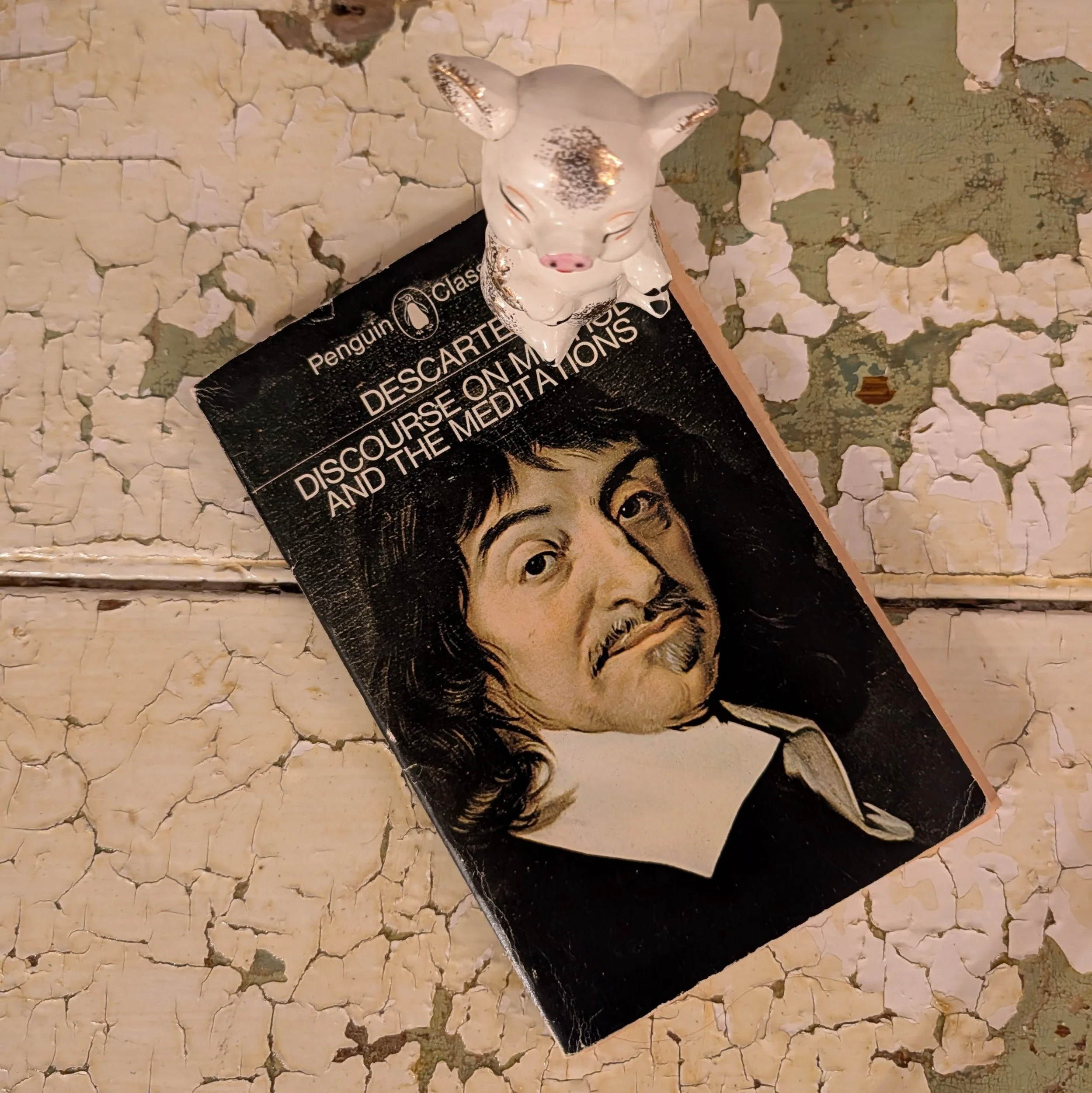
Literally volumes are written on this passage. When I was in my late twenties in 2004, I studied it very closely, particularly the discussion on this exclusion from the Cogito between Michel Foucault and Rene Descartes.
Particularly the phrase “would not be less extravagant” why did Descartes say “not be less”? What does the word extravagant really mean?
Now fast forward to 2022, my father passed away. I went to a mass at which a friend of the family had my father's name added to the intentions. In the homily, the Priest said, “God loves you extravagantly, like a father loves his child.”
And he was right: I've been extravagantly loved, loved even when I did wrong, loved beyond all reason.
And I want you to know, I want you to know you're also loved in this way. Christ literally died so that you might live, He loves you extravagantly, beyond all reason.
I mean does it make practical sense in human understanding, is it reasonable that Christ chose death for us? No it is not, that's the Passion of Christ.
The Passion of Christ is to love beyond all measure, to love extravagantly, beyond reason.
And His suffering, his Passion, it can cause us only to have a delusional gratitude, an extravagant thankfulness, to have Faith, to feel hope.
And when you feel that gratitude, for the fact that someone literally died for you, you build resilience, you feel optimism. To be extravagantly loved, to feel that thankfulness, is to feel healthy.
