
Tell someone you spend twenty minutes slowly admiring park trees, stretching your jaw in the mirror, scrubbing your counters with vinegar, and plating Tuesday's lentils like a bistro dish, and they might tease you for being a bit of a "space cadet"—someone floating pleasantly in the clouds of soft wellness.
Look closer, though, and the joke flips on its head. Practicing moderate preventive medicine isn't dreamy escapism. It is quiet, practical training in human self-reliance—the exact kind of steadiness that prepares you for almost anything life throws your way, right up to becoming a real space cadet instead of a figurative one.
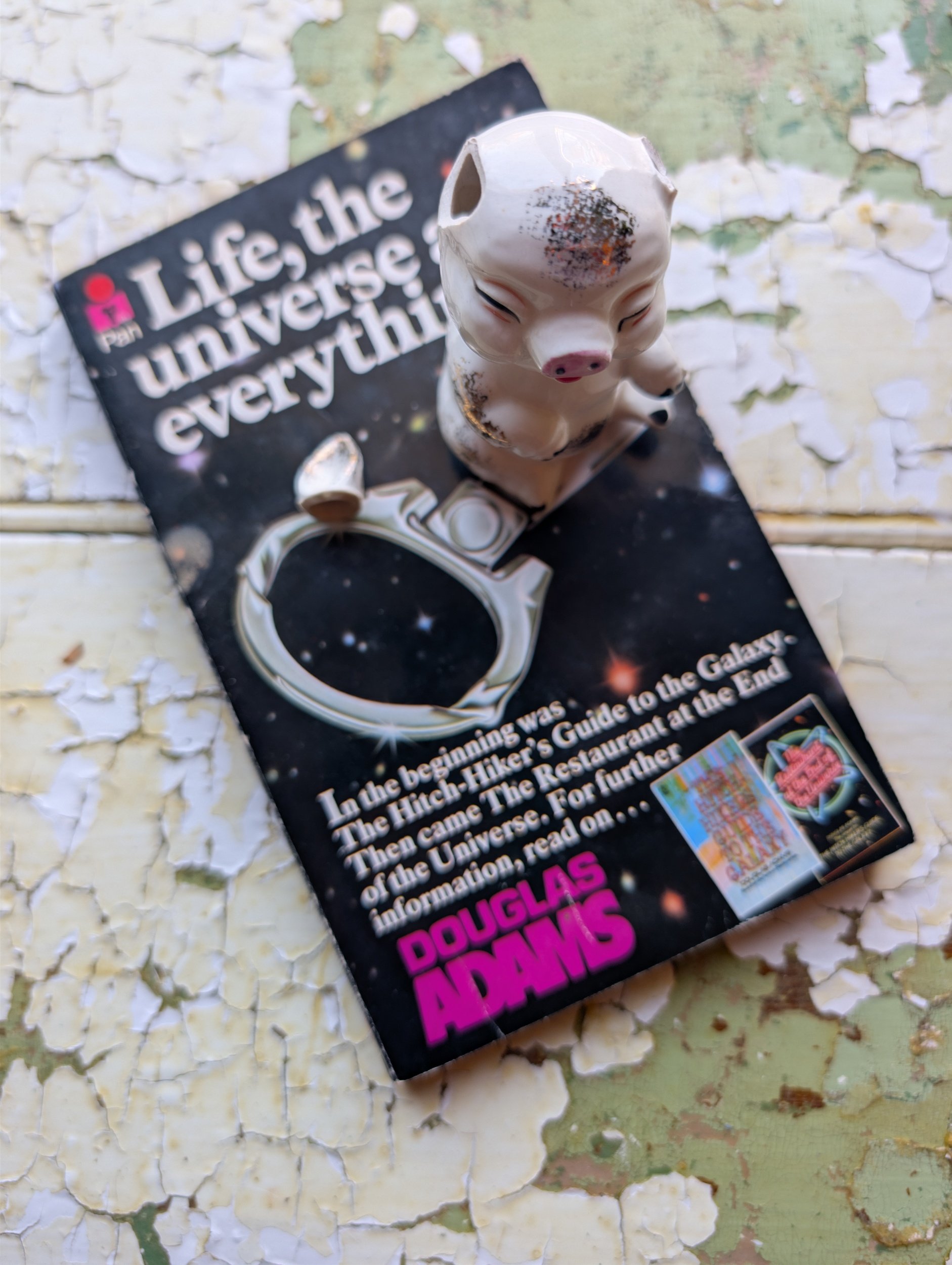
Moderate preventive medicine occupies the sensible middle ground between doing nothing and chasing extreme biohacking. It focuses on habits that won't hurt you—and just might make you feel noticeably better. Better still, it makes an ally out of the placebo effect rather than treating it like a dirty word. In clinical research, the placebo response is a real physiological cascade: engaging in a deliberate ritual of care can prompt your brain to release genuine endorphins, dial back stress hormones, and soften discomfort. Studies on "open-label placebos" even show that people feel better when they know they are taking an inert pill, simply because intentional self-care signals safety to the nervous system. When a low-risk habit leaves you calmer and more resilient, the benefit counts whether chemistry, psychology, or both did the work.
Underneath that gentle philosophy lies a much larger reality of modern life: the responsibility for daily health is steadily shifting from the doctor to the patient.
Mission Control vs. Daily Operations: The Lesson of Germany's Check-up 35
For decades, healthcare worked like a body shop. You ignored your engine until a warning light flashed red, dropped yourself off at a clinic, and expected a physician to fix the breakdown. Rising chronic illnesses, aging populations, and overstretched medical systems have made that reactive model unsustainable. Doctors are indispensable for diagnosis, medication, and crisis intervention—but they cannot manage your sleep, your stress, your air, or your dinner plate.
Germany's statutory Check-up 35 (Gesundheits-Check-up) captures this realignment cleanly. Established in 1989 as a pillar of public primary prevention, the program gives publicly insured adults one comprehensive baseline check-up between ages 18 and 34, and then one every three years starting at age 35. During the visit, a physician screens blood pressure, cholesterol, blood sugar, urine markers, and personal risk factors, then counsels the patient on everyday adjustments. When helpful, the doctor writes a formal Präventionsempfehlung (prevention recommendation) for lifestyle courses—covering nutrition, movement, or stress management—that the patient can bring to their health insurer for support.
Notice the new division of labor. Your doctor is no longer a round-the-clock rescuer; they are Mission Control, checking your telemetry once every three years and helping you adjust your trajectory. Between those check-ins, you are the one flying the craft.
Robinson Crusoe in the City—and in Orbit
That shift puts modern city dwellers in a surprisingly classic literary spot: we have all become Robinson Crusoe in the city.
Daniel Defoe's shipwrecked protagonist didn't survive his island by sitting on the beach waiting for a passing frigate. He salvaged tools from the wreck, fortified a livable shelter, tended his food supply, and invented structured routines to keep both his body and his mind intact. Marooned among concrete towers, transit delays, convenience food, and digital static, urbanites face a parallel challenge. You may live within walking distance of half a million people, yet no one is showing up at your door to lower your cortisol, purify your apartment air, or talk you out of a midnight spiral.
And what is a spacecraft—an orbital station or a vessel bound for Mars—if not the ultimate Robinson Crusoe island? An astronaut cannot pop down to urgent care when there is a twenty-minute communication lag to Earth. Real space cadets survive and thrive because they master quiet, zero-drama, preventive self-maintenance long before liftoff.
You don't need a NASA badge to build that same readiness. Six ordinary, low-risk habits turn everyday city living into an all-purpose training ground.
1. Cognitive Behavioral Therapy (CBT): Keeping Crusoe's Ledger
Long before psychology coined a clinical term for it, Defoe's Crusoe took pen to paper and split a page into two columns—"Evil" and "Good"—answering each fearful thought with a calm, factual counterweight. That habit is the core engine of Cognitive Behavioral Therapy (CBT).
CBT works on a clear loop: thoughts, bodily sensations, and behaviors continuously feed one another. Unchecked mental habits—catastrophizing a minor setback, assuming the worst from an ambiguous email, or falling into all-or-nothing thinking—keep your nervous system idling in emergency mode. Whether practiced with a therapist or applied moderately on your own through brief thought records and structured workbooks, CBT teaches you to run a quick diagnostic on stress: What is the actual evidence here? What is a more accurate, workable interpretation?
In daily life, moderate CBT keeps small frustrations from snowballing into burnout. Under extreme pressure—whether navigating a personal crisis or living inside a confined spacecraft where you literally cannot walk away from your own mind—the ability to audit your thoughts is pure survival gear.
2. Tree Bathing: Sensory Anchoring Before Liftoff
Born in Japan in the 1980s as shinrin-yoku, tree bathing (or forest bathing) is simply immersing your senses in a wooded space. You don't need untouched wilderness or hiking boots; an urban ravine, botanical garden, or tree-lined neighborhood park works beautifully.
A basic twenty-to-thirty-minute session follows four simple steps:
* Drop the destination. Silence your phone, skip the podcasts, and forget your step count.
* Cut your pace in half. Stroll noticeably slower than your normal commuter speed, stopping whenever light, bark, or moss catches your eye.
* Run a sensory sweep. Notice the lattice of branches overhead, the coolness of shaded air, the crunch of gravel or leaves underfoot, and the scent of pine, resin, or damp earth.
* Sit still for five minutes. Take a bench or a dry patch of grass and let your gaze soften on moving foliage.
Studies link quiet time among trees with gentle reductions in blood pressure and cortisol, aided in part by inhaling phytoncides—antimicrobial compounds emitted by plants. Even if the main effect is simply stepping out of traffic and off a screen, your nervous system benefits. Real astronauts know how deeply humans need living greenery; space agencies actively build orbital plant chambers and virtual forests to steady crew morale. Practicing sensory stillness beneath Earth's trees builds an internal anchor you can carry anywhere.
3. Face Yoga: Zero-Equipment Tension Relief Anyone Can Do
Modern urban stress settles straight into the face—squinting at laptops, furrowing your brow at headlines, and clamping your jaw in traffic. Face yoga pairs gentle facial stretches, brief isometric holds, and light fingertip self-massage to undo that hidden grip.
Its defining advantage is that literally anyone can do it, regardless of age, fitness, or mobility. No gym, no mat, and not even gravity required. While waiting for the kettle to boil, sitting at a desk, or strapped into a cabin seat, you can open your mouth into a slow, silent "O" to stretch a locked jaw, trace light circles over your temples and cheekbones, or smooth your forehead while letting the muscles around your eyes drop. Dramatic anti-aging promises are mostly hype, yet releasing tight facial muscles reliably eases tension headaches—and in microgravity, where fluid shifts toward the head and high-stakes stress tightens the jaw, knowing how to release upper-body tension with nothing but your own hands is remarkably handy.
4. Health Foods Without Anxiety: Fueling Any Mission
Modern nutrition commentary swings wildly between miracle ingredients and forbidden toxins, turning ordinary meals into stress tests. Moderate preventive medicine starts from a far calmer baseline: barring specific food allergies, celiac disease, or diagnosed medical conditions, most whole foods are safe for most diets.
That steadier rule transforms eating from restriction into curiosity. You don't need an austere protocol to eat preventively. Adding a spoonful of fermented vegetables for gut diversity, folding hemp or flax seeds into oatmeal, simmering bitter greens with garlic, or steeping fresh ginger tea are effortless, low-risk experiments. If a particular food doesn't sit well with you, you simply skip it next time. Building broad dietary comfort—rather than rigid food anxiety—trains the adaptability needed for anything from an unexpected travel delay to maintaining gut health on long-haul mission rations.
5. Natural Cleaning Products: Managing a Closed-Loop Habitat
Just as Crusoe maintained his shelter, preventive health extends to the air inside your own four walls. Conventional household cleaners often pack harsh solvents, chlorine bleach, and heavy synthetic fragrances that off-gas volatile organic compounds (VOCs) into indoor spaces. Even without diagnosed allergies, breathing those residues day after day can quietly irritate airways, dry out skin, and trigger low-grade headaches.
Choosing simpler, naturally derived, hypoallergenic products—fragrance-free plant-based soaps, castile soap, baking soda, and plain white vinegar—cuts down that invisible chemical load. (One practical caveat: "natural" cleaners saturated with concentrated essential oils can still irritate sensitive skin and lungs, so unscented or lightly scented formulas stay the gentlest option.) Think of it as closed-loop habitat training. On a tightly sealed space station—much like a modern city apartment in winter—you cannot simply crack a window to clear toxic fumes. Keeping your indoor ecosystem clean and non-irritating is everyday life-support engineering.
6. Everyday Aesthetics and Cooking: Defeating Monotony
Aesthetics rarely show up on medical charts, yet sensory care is one of the most reliable tools for keeping a human mind balanced. And no aesthetic practice is healthier or more universally accessible than cooking.
You don't need chef credentials to reap the payoff. Preparing a simple meal wakes up every sense at once: the clean snap of herbs beneath a knife, the aroma of aromatics hitting warm oil, the visual lift of colorful vegetables arranged on a real plate, the quiet absorption of adjusting salt and acid until a broth tastes balanced. That gentle focus crowds out anxious loops far better than passive scrolling. In long-duration spaceflight, researchers worry constantly about "menu fatigue" and sensory monotony—when every day looks and tastes the same, morale and sharp thinking erode. Taking ten minutes to cook and plate a meal nicely on Earth isn't fussy; it trains you to manufacture beauty, rhythm, and dignity inside ordinary circumstances.
Calling someone a "space cadet" is usually a gentle jab at having your head in the clouds. Yet mastering moderate preventive medicine—checking in with medical Mission Control on the model of Germany's Check-up 35, tending your urban island like Robinson Crusoe, and welcoming the real biological lift of the placebo effect—builds the exact opposite kind of person. Someone grounded, adaptable, and quietly self-reliant enough to handle an ordinary Tuesday, an unexpected storm, or a seat on the next launch pad.
