
Keep the Cheese on your Plate: Everyone Hated Newton and Many Disliked Galileo
Intellect isn't a popularity contest. Now, I'm no genius, I'm just a nerdy Catholic woman but I've read a few books and I want you to know that
to look back at the origins of modern science is to look at a rogue's gallery of deeply unpleasant, abrasive, and socially impossible human beings. We tend to romanticize historical figures, turning them into serene marble busts of pure intellect. But if you had to share an office, a dinner table, or a neighborhood with Isaac Newton or Galileo Galilei, you likely would have detested them.
Understanding why they were hated—and how modern society would treat them today—reveals a crucial lesson about human variation, tolerance, and how we handle those who think and act outside the social norm.
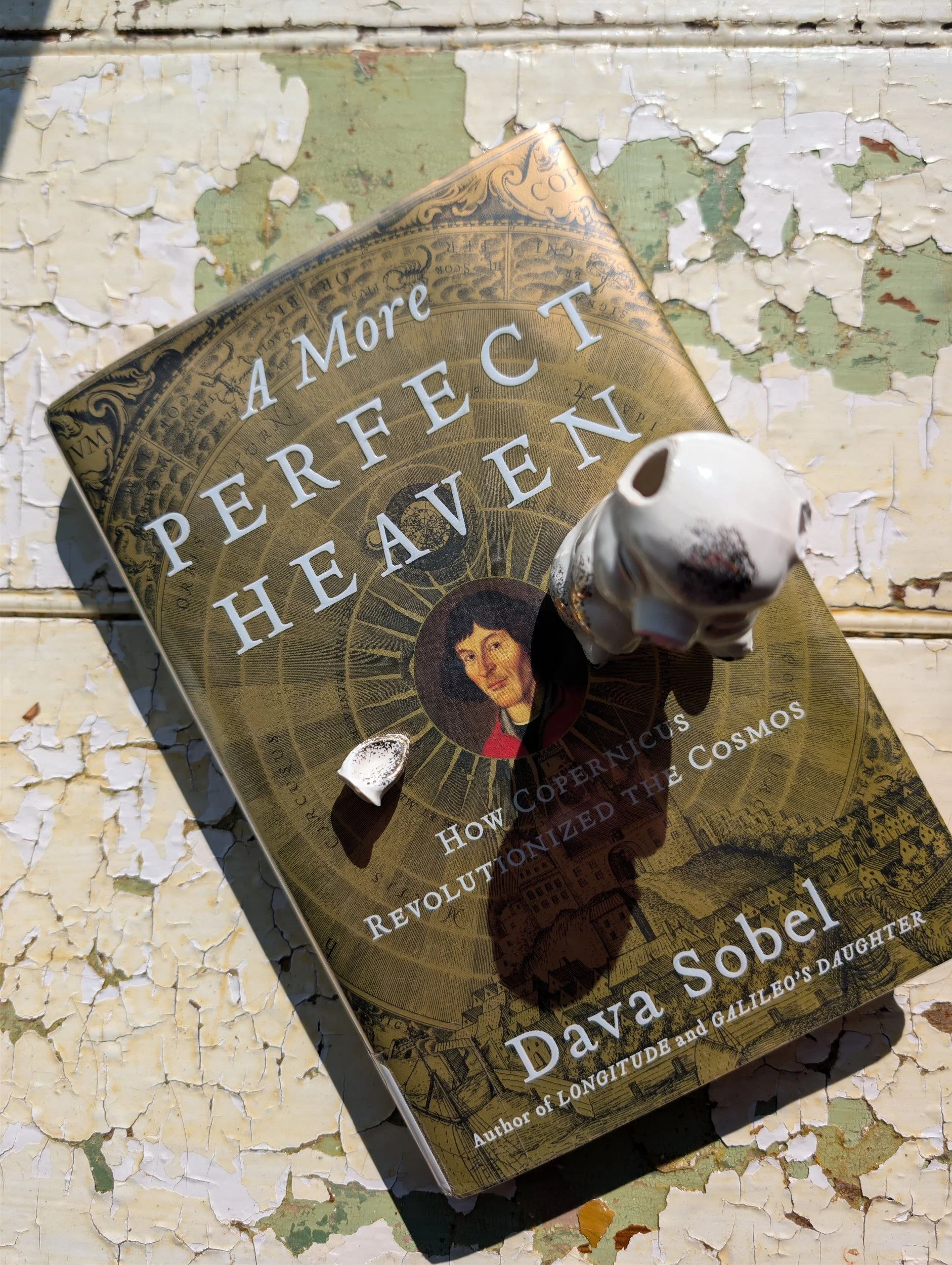
Isaac Newton: The Paranoid Hermit Who Saved Physics
Sir Isaac Newton was universally recognized in his lifetime as a genius, but almost nobody actually liked him. He was reclusive, vindictive, hyper-sensitive to criticism, and consumed by relentless feuds.
When Robert Hooke suggested he had contributed to Newton's work on gravity, Newton scrubbed Hooke from his papers and allegedly destroyed Hooke's only surviving portrait after becoming President of the Royal Society. His calculus war with Gottfried Wilhelm Leibniz became an international obsession, driven largely by Newton’s refusal to share credit. He spent years tormenting the Royal Astronomer John Flamsteed over star catalog data, eventually publishing Flamsteed’s unapproved notes just to spite him.
Newton did not possess a pleasant "quirkiness." He was paranoid, deeply secretive, and spent thousands of hours writing obscure theological treatises and practicing dangerous medieval alchemy in near-total isolation.
Would Newton Be Institutionalized Today?
If Isaac Newton lived in the 21st century, his behavior would almost certainly trigger psychological intervention.
In 1693, Newton suffered a severe nervous breakdown involving intense insomnia, profound paranoia, and delusions—writing letters to friends accusing them of trying to embroil him with women or turn against him. Today, a young man who locks himself in a room for weeks, refuses sleep, hallucinates, obsessively conducts hazardous chemical experiments, and writes aggressive, delusional correspondence would rapidly find himself subject to an involuntary psychiatric hold.
Diagnosed through a modern clinical lens, he might be placed on the autism spectrum, diagnosed with severe Obsessive-Compulsive Disorder, or labeled with Schizotypal Personality Disorder. During his acute crises, contemporary society would likely institutionalize him or heavy-handedly medicate his symptoms into submission. In doing so, we might have stabilized his mood—and permanently muted the brain that formulated the laws of motion and universal gravitation.
Galileo Galilei: Devout, Combative, and Demolishing Moon Myths
Galileo Galilei presents a different flavor of difficult. Unlike Newton the hermit, Galileo was an outgoing, polemical fight-starter.
He was also a devout Catholic. His two daughters were nuns, and Galileo consistently viewed his astronomical observations through the telescope as a way of discovering the glory of God’s creation. Yet, despite his deep religious faith, Galileo possessed an extraordinary talent for turning allies into enemies.
Leaving the Cheese Out of Outer Space
Before Galileo turned his primitive telescope toward the heavens in 1609, popular folklore, literary proverbs, and old Aristotelian assumptions treated celestial bodies as perfect, smooth, unblemished spheres. Folk wisdom jokingly claimed the Moon was made of green cheese, while scholarly tradition insisted heavenly objects were made of an ethereal, pristine substance entirely unlike the rugged Earth.
Galileo shattered both ideas. Looking through his lenses, he discovered that the Moon’s surface was not smooth, polished, or edible—it was scarred, rough, pitted with deep craters, and carved by massive jagged mountains. By tracking how shadows lengthened and shortened across lunar plains, he mathematically proved the Moon was made of solid, stony, earth-like rock.
In doing so, Galileo disproved the moon-is-made-of-cheese hypothesis once and for all, allowing us to leave the cheese out of outer space and keep it right where it belongs: on our plate.
Despite this monumental contribution to human understanding, his combativeness remained his undoing. When Pope Urban VIII—who had initially been a supporter and friend—granted Galileo permission to write a book objectively comparing heliocentric and geocentric models, Galileo wrote the Dialogue Concerning the Two Chief World Systems. In it, he placed the Pope’s geocentric arguments into the mouth of a fictional character named "Simplicio"—a name that double-functioned as "Simpleton."
Galileo was brought before the Inquisition not simply because of his science, but because he couldn't resist mocking the most powerful figures in Europe. The Church declared him suspect of heresy, forced him to recant, placed him under house arrest for the rest of his life, and banned his works.
Would Galileo Be Over-Medicated Today?
If Galileo were a student or young academic today, his relentless combativeness, refusal to accept authority, hyper-fixation on his own ideas, and provocative humor would draw immediate clinical attention.
In childhood, he would likely be tagged with Oppositional Defiant Disorder (ODD) or ADHD. As an adult, his high-energy, sleep-deprived writing sprees and aggressive public confrontation style might result in diagnoses of Bipolar I or Disruptive Mood Dysregulation.
Modern institutions do not tolerate uncomfortable noise. Rather than enduring Galileo's abrasive public debates, modern society would offer a prescription pad: mood stabilizers, anti-anxiety agents, or antipsychotics designed to "regulate" his behavioral excess. We would flatten the spike in his personality, trading a defiant genius for a compliant, manageable citizen.
The Spectrum of Difference: Why We Must Leave People Alone
Human temperament exists on a vast, uneven spectrum of difference. True originality rarely comes neatly packaged in a polished, socially agreeable personality. Often, the very traits that make someone intolerable at a cocktail party—obsessive focus, social indifference, stubborn defiance, and absolute disregard for consensus—are the exact traits required to overturn centuries of accepted error.
You do not have to be a genius to benefit from this truth, nor do you have to like everyone you cross paths with. But society suffers when it demands total conformity in temperament and speech.
If you find someone off-putting, weird, combative, or bizarrely fixated on things you don't care about, the most pragmatic solution is simple: just leave them alone.
Allowing eccentric or difficult people space to exist without immediately trying to "fix," pathologize, or silence them is not just an act of tolerance; it is an act of long-term self-interest. The person whose personality grates on your nerves today might build the tool, write the code, solve the problem, or discover the principle that saves your life tomorrow.
Action vs. Speech
There is a vital distinction between words and conduct: Don't disable people for what they say; disable them for what they do.
When society starts penalizing, medicating, or canceling people purely for their words, eccentric ideas, or difficult personalities, it disables its own ability to innovate. Sure avoid people for being poor company, but generally leave them alone. There's a difference between a hermit and a sociopath. Remember that people say dumb stuff, some people say dumb stuff socially, but it doesn't make them evil. Tolerance everywhere. It's important with respect to this to minimalise medication and institutionalisation because it allows these grating scientists to help you in the long run and it helps everyone to build tolerance for difference. Also institutionalisation is expensive and remember we like saving money in our piggy banks.
If someone is causing physical harm or economically disabling someone do something about it. But if they are simply strange, sharp-tongued, awkward, or disagreeable, let them be. History proves that the people who fit in nowhere are often the only ones who push the world forward.
Everyone is different ❤️ Let them be.
