
I am personally a part-time vegetarian, which is a polite way of saying I try to save the planet Monday through Friday and negotiate with my conscience over the weekend. My official motivation is straightforward and deeply unglamorous: it is more environmentally friendly. Skipping meat most days shrinks my carbon footprint, uses less land and water, and allows me to feel a mild, unobtrusive glow of civic virtue while eating a really good chickpea chaat.
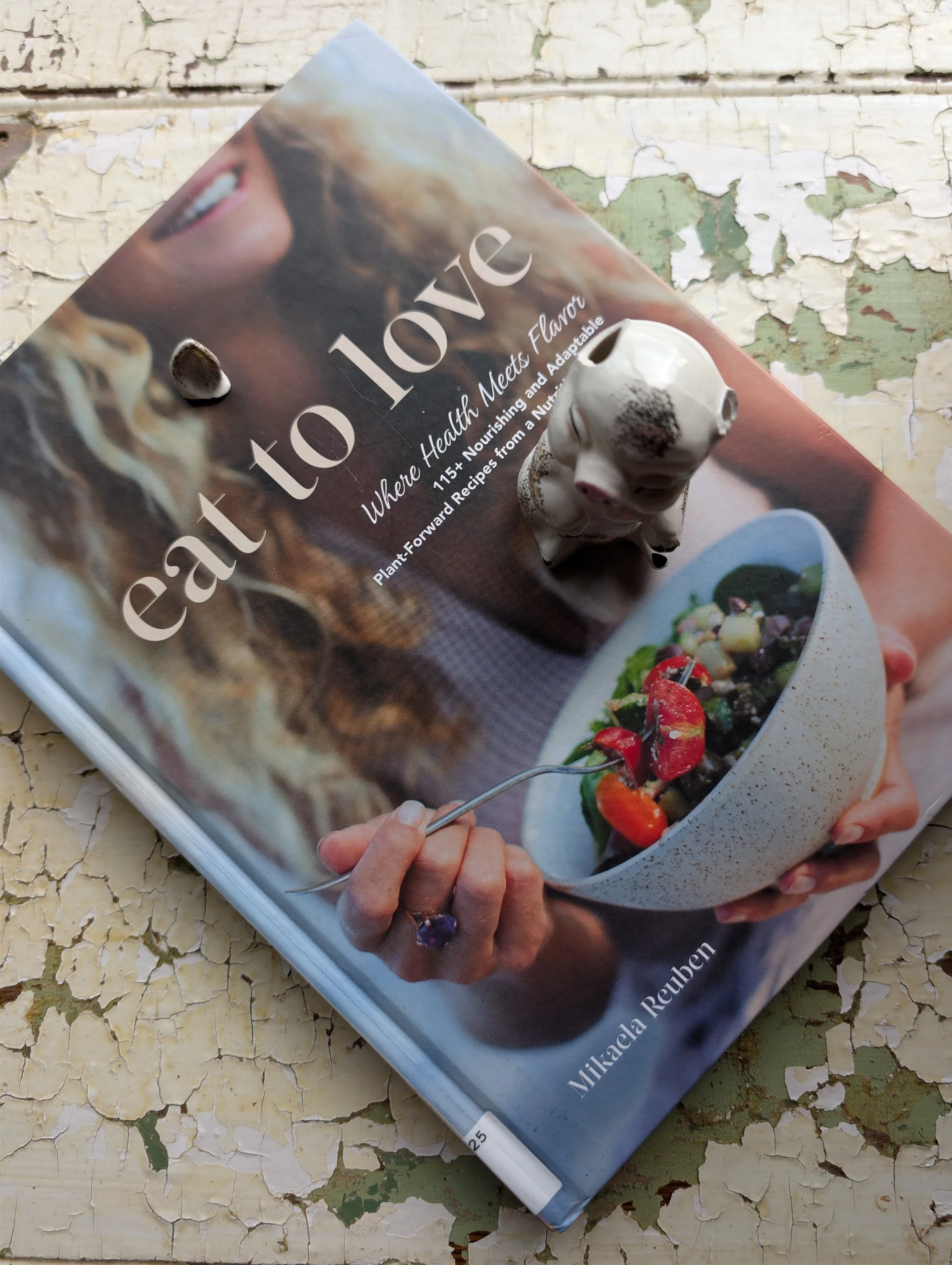
Vegetarianism is good for everyone and the earth. And please never judge a book by it's cover ❤️
Yet if I am being completely honest, the single best argument I have ever heard for vegetarianism has nothing to do with greenhouse gases, deforestation, or the fate of the Amazon rainforest. It is the simple, slightly surreal fact that rats laugh and play.
Laughing Rats
In a remarkable 2003 paper published in Physiology & Behavior—titled "'Laughing' rats and the evolutionary antecedents of human joy?" (Vol. 79, Issue 3, pp. 533–547)—neuroscientists Jaak Panksepp and Jeff Burgdorf documented something that permanently rearranges your feelings about the animal kingdom. When rats engage in rough-and-tumble social play, or when researchers gently tickle their bellies, the rodents let out rapid bursts of high-frequency, 50-kilohertz ultrasonic chirps. Humans cannot hear these chirps without specialized audio equipment, which means that at any given moment, somewhere beneath the floorboards of civilization, tiny rodents are essentially running an ultrasonic improv club. Better yet, the rats don't just tolerate being tickled—they actively chase the researcher's hand, begging for an encore. Panksepp and Burgdorf identified these chirps as an evolutionary precursor to human laughter and genuine joy.
That finding is a hard one to shake. Rats have arguably the worst public-relations team in mammalian history. If they possess an inner life rich enough for tickle fights and giggles, it becomes awfully difficult to stare down at a burger and tell yourself that cows are basically slow, caffeinated furniture.
Vive la Rat-atouille—and Little Joe’s Foreign Policy
Of course, pointing out that rats are joyful little comedians does invite one awkward historical detour: humans have, on occasion, looked at a rat and thought, Needs garlic.
France—a nation otherwise celebrated for elevating butter and pastry into high art—has a surprisingly dark history with rodent cuisine. During the chaos, food shortages, and brutal military sieges of the French Revolution era, starvation routinely bulldozed culinary taboos; by the tail end of the revolutionary wars, General André Masséna's besieged French garrison in Genoa was famously reduced to surviving on rats and boiled shoe leather. And Paris never entirely shook the siege-menu instinct. When the Prussian army encircled the city during the brutal winter of 1870–1871—the crisis that sparked the revolutionary Paris Commune—Parisians once again turned to cats, dogs, and rats for protein, yet stubbornly refused to stop going out to restaurants while doing it.
Because this was Paris, nobody was just going to toss a rodent on a plate and call it a day. Upscale dining rooms defiantly printed menus offering zoo animals like fillet of elephant and bear thigh right alongside sautéed rat and salmis de rats smothered in Sauce Robert. According to one enduring anecdote from the siege, a horrified Parisian woman took one look at the sautéed rat special and asked if she might just have a plain salad instead, prompting the waiter to draw himself up haughtily and reply, "Madame, this is a restaurant, not a meadow!"
I would like to go on the record right now and assure the global rat community that they are perfectly, amusingly safe from me. No matter how high grocery inflation climbs, no matter how velvety the Sauce Robert, I have zero plans to braise a creature that enjoys being tickled. As far as I am concerned, rats can hold their tiny 50-kilohertz comedy festivals in complete peace.
Unfortunately, I do not live alone. I share my home with my cat, Little Joe—and I regret to inform the rodent public that Little Joe does not share my progressive views.
Little Joe has never read Panksepp and Burgdorf. Even if I sat him down with a printed copy of Physiology & Behavior and patiently explained that rats experience the evolutionary antecedents of human joy, Little Joe would simply blink slowly, lick one paw, and ask whether laugh builds muscle and makes them m
tougher. He does not care about my carbon footprint, he has no interest in sustainable agriculture, and he certainly does not subscribe to part-time vegetarianism. To Little Joe, a rat is a self-propelled squeaky toy that happens to be made of lunch. I may be trying to eat lightly on the earth, but thanks to Little Joe, my household's overall ethical stance averages out to an uneasy truce.
Enter the Original Flexitarian
What surprised me most about my own part-time vegetarianism—trying to do the right thing most of the time without pretending to be a saint—is discovering that an actual saint invented the whole routine nearly fifteen hundred years ago.
We tend to talk about "flexitarianism" or "plant-forward eating" as if it were dreamed up in a minimalist Brooklyn coffee shop in 2014. In truth, an influential part-time vegetarian guide of Western history was drafted around 530 AD on a rocky hilltop at Monte Cassino by Saint Benedict of Nursia.
To appreciate just how refreshingly sane Benedict was, you have to picture the state of Christian monasticism when he sat down to write the Rule of Saint Benedict. At the time, asceticism was basically an extreme sport. Desert hermits in Egypt and Syria competed in Olympic-level feats of misery—perching on top of stone pillars for thirty years, wearing hair shirts, surviving on damp lentils, rainwater, and pure spite, and treating their own stomachs like treacherous enemies.
Benedict took one look at that lifestyle and essentially said, Absolutely not. He wasn't trying to recruit spiritual stuntmen; he wanted to build a real community where ordinary humans could pray, copy manuscripts, tend the gardens, and make it past their fortieth birthday without hallucinating from scurvy. His guiding philosophy was moderation. And when it came to the dining hall, he settled on an arrangement that was equal parts pragmatic, balanced, and unintentionally hilarious: for the healthy, a vegetarian table; for the sick, meat by doctor's prescription only.
Two Dishes, Half a Pint of Wine, and Zero Quadrupeds
In Chapter 39 of the Rule, titled "The Proper Amount of Food," Benedict lays out the monastic meal plan with the precision of a hospital dietitian crossed with an unusually considerate boarding-school headmaster. Every monk was guaranteed a generous pound of bread each day, plus two cooked dishes—typically hearty stews of beans, lentils, grains, or root vegetables. Why two? Because, as Benedict sensibly explains, "if anyone cannot eat of the one, he may eat of the other." Even in the sixth century, Benedict knew there was always one guy in the dining hall who silently hated turnips. When fresh fruit or young vegetables were in season, a third dish joined the spread. And because Benedict was Italian and not a monster, every monk received a hemina of wine—roughly half a pint a day.
Then comes the famous catch: "Except the sick who are very weak, let all abstain entirely from eating the flesh of four-footed animals."
Crucially, Benedict didn't ban red meat to lower the abbey's methane output, nor because he worried that pigs and sheep were secretly giggling in the pasture. He didn't even believe eating animals was inherently sinful—the early Church had already firmly rejected ultra-radical sects like the Manichaeans for claiming meat was morally impure. Instead, Benedict was operating on a blend of spiritual discipline and sixth-century Galenic medicine.
Under the medical theory of the day, heavy red meats generated excess internal "heat" in the body. Too much heat, doctors warned, inflamed the humors, stirring up anger, restlessness, irritability, and deeply un-monk-like daydreams. If you are trying to manage a quiet monastery packed with celibate men who wake up at two in the morning to chant Psalms, the last thing you want is a dormitory full of guys buzzing on mutton-induced inner heat. Beans and barley kept the humors cool, the tempers low, and the hallways peaceful.
Take Two Meatballs and Call the Abbot in the Morning
What elevates Benedict from a strict vegetarian into history's patron saint of part-time vegetarianism is his total refusal to let a dietary rule endanger anybody's health. Three chapters earlier, in Chapter 36 ("The Sick Brothers"), he makes the medical loophole crystal clear:
> "Let the use of fleshmeat be granted to the sick who are very weak, for the restoration of their strength; but as soon as they are better, let all abstain from fleshmeat as usual."
>
To Benedict, meat was neither an everyday entitlement nor a guilty weekend splurge—it was a heavy-duty pharmaceutical. In 530 AD, there were no antibiotics, no IV drips, no electrolyte packets, and no protein shakes. When a fever-ridden or malnourished monk was fading fast, rich bone broth and roasted meat were the most potent restorative medicine available. Benedict even commanded the abbot to inspect the infirmary personally so the sick brothers wouldn't be neglected by grumpy kitchen staff.
Of course, you do not have to be a medieval historian to imagine the theatrical possibilities this created.
Over the Middle Ages, large monasteries constructed a dedicated dining room to treat the sick with a meaty diet tucked conveniently between the vegetarian refectory and the infirmary. They named it the misericord—literally, the "room of mercy."
Discretion, Chickpeas, and One Unrepentant Cat
Even if later centuries stretched his fine print to the breaking point, the underlying spirit of Saint Benedict's kitchen holds up remarkably well. Historians often point to discretio—discretion, or grounded, flexible judgment—as the quiet superpower of the Rule.
As it turns out, Little Joe would have fit right in at a medieval abbey. Long before modern households began debating the ethics of pet ownership, monasteries across Europe relied heavily on cats as both unpaid security guards and cherished fireside companions. A self-sufficient Benedictine monastery was essentially an all-you-can-eat buffet for rodents: granaries overflowing with barley and beans, cellars stacked with bread and cheese, and quiet scriptoria filled with priceless manuscripts written on animal-skin parchment and bound with delicious flour paste. Without a few sharp-clawed patrol officers on duty, an entire winter's worth of vegetarian provisions—and centuries of hand-copied theology—could vanish overnight into the bellies of well-read mice.
Yet the relationship between monks and their cats quickly outgrew mere pest control. In the quiet solitude of monastic life, a purring roommate was worth its weight in gold. Around the ninth century, an Irish Benedictine monk working at Reichenau Abbey took a break from his Latin hymns and grammar notes to scribble an affectionate Old Irish poem in the margin of his notebook about his white cat, Pangur Bán. In it, the scribe treats the cat as an equal partner in quiet concentration, cheerfully noting that while Pangur sits locked in fierce focus waiting for a mouse to dart from the wall, the monk sits beside him hunting elusive words and meanings in the dark—two contented professionals thriving side by side. Even the notoriously strict thirteenth-century English rulebook for secluded religious women, the Ancrene Wisse, felt compelled to bend for felines. Fearing that pets would distract cloistered anchoresses from their prayers, the guide flatly forbade owning any domestic animal before slipping in one delightfully practical exception: "you should not keep any animals, except a single cat". Clearly, even the most austere medieval spiritual directors understood that keeping mice out of the pantry—and having a warm companion curled up during a freezing winter vigil—was practically a necessity.
That same cozy contradiction is alive and well today among countless vegans and vegetarians. Walk into the apartment of almost any committed plant-based eater and there is a solid chance you will meet a thoroughly unrepentant cat lounging on the sofa, basking in the sun like a furry little abbot. Modern vegans may spend twenty minutes scrutinizing grocery labels to make sure no trace of dairy or gelatin sneaks into their pantry, yet they cheerfully serve as full-time companions, doormen, and personal chefs to tiny obligate carnivores who still patrol the floorboards for spiders and field mice with less ethical hesitation.
Even before the internet, cats were beloved company and practical pest control. Could it be that these companions made up networks of thought even before the digital? Nowadays cats' faces are also practical visualisation techniques. After all, the internet is made of cats, but how long have they accompanied the interiority of thought? Google pet prints on manuscripts ❤️
