The Ivory Tower, The Tower of Babel, AI, First Philosophy and Food!!
Restoring "first philosophy" to introductory university courses is essential not only for rescuing higher education from hyper-specialisation, but for recognising a vital, grounded truth: pursuing knowledge for its own sake is not an ivory-tower abstraction. It is a rigorous, practical method for training the physical human form and understanding human purpose.
Integrating a foundational philosophical framework reframes how we approach study, shifting it from a detached mental exercise into an embodied, vital discipline.
The Need for Generalised and Foundational Reasons
Modern higher education treats the mind and body as separate machines—the brain processes data while the body sits passively in a lecture hall. First philosophy breaks down this artificial division by reuniting intellectual inquiry with lived reality.
Overcoming Fragmentation: Fragmented, hyper-specialised courses train humans to be narrow cogs in an economic machine. First philosophy offers a unifying view that reconnects thought to whole-human vitality.
The Pursuit of Coherence: When study lacks foundational roots, it creates cognitive dissonance and fatigue. First principles give the mind a clear architectural map, reducing the friction of learning.
Resisting Utilitarianism: Utilitarian education treats the student as a resource to be extracted. Pursuing knowledge for its own sake treats the human being as an end in themselves, fostering resilience against burnout.
Personal Reasons Why We Study
Study is often framed as a sedentary chore, but at its biological and neurological core, seeking truth is an active, physical engagement with the environment.
Cultivating Neural Plasticity: Just as physical exercise builds muscle fiber, wrestling with abstract first principles actively alters neural pathways. Curiosity and deep inquiry stimulate the nervous system, keeping the brain agile, adaptable, and robust against cognitive decline.
Navigating Uncertainty as a Physical Stress Response: Existential ambiguity triggers the same physiological stress responses as physical danger. Philosophy trains the mind—and by extension the body—to remain calm, centered, and structurally sound under pressure.
The Joy of Wonder: Wonder is a somatic experience—a quickening of the pulse, an intake of breath. Higher learning for its own sake can be an aesthetic experience like looking at a vista from a dizzying height.
Why Universities Exist
If a university is merely a vocational training center, it ignores the holistic development of the human animal.
Guardians of Deep Attention: In an age of fractured digital stimuli that exhaust our attention spans, the university exists as a sanctuary for deep, sustained focus. Practicing philosophy trains our physical capacity for prolonged concentration.
Spaces for Embodied Community: The traditional universitas was a gathering of whole persons. Universities provide physical spaces where human beings face one another, debate, and practice the art of shared reasoning in real time.
Cultivating Vital Citizens: A society needs citizens whose bodies and minds are disciplined enough to resist impulsive panic. Universities forge this steadiness through rigorous intellectual stamina.
What Higher Knowledge Means on an Individual Level
On an individual level, higher knowledge is a form of physical and mental conditioning. It is the gym for human consciousness.
Integration of Self: True knowledge bridges intellect and physicality. When you understand a foundational truth deeply, your posture, your breathing, and your physical presence shift to align with that clarity.
Depth of Perspective: Higher knowledge builds intellectual stamina, giving an individual the endurance to withstand cultural noise and immediate anxieties without physical or mental collapse.
A Meaningful Life: Pursuing knowledge for its own sake trains us to act with deliberate grace. It transforms the human form from a passive biological vessel into an active, finely tuned instrument of wisdom.
The Cost of Truncation: Language, Descartes, and AI
A critical misstep occurred when English-speaking nations narrowed their focus almost exclusively to analytic philosophy, largely sidelining continental philosophy and first principles. Language itself is inherently biased; every word, down to the smallest article, is shaped by context, syntax, and cultural variances that shift across tongues.
When Descartes was truncated—specifically when the metaphysical and divine framework of his philosophy was stripped away to fit a hyper-rationalist, materialist mold—God was effectively expelled from the machine. Yet, this vacuum did not last. The exiled sacred simply returned under different guises through psychology, medicine, and cognitive science, often absorbed from other cultures that refused to divorce the mind from the transcendent.
This is not merely an abstract academic critique; it has profound, urgent stakes for technology. Continental philosophy and first-principles thinking are essential not only to the arts, but to the ethical training of AI. Building safer AI requires grappling with the profound biases of language, meaning, and human consciousness because above anything AI must preserve the human, and first philosophy is the science of human purpose on earth.
Beyond Economics: The Ultimate Call to Serve
Ultimately, each student needs to discover an educational purpose that extends far beyond economic survival. This is what the oath that they take in medicine is about and this oath is about harmless service all over the world. (That's why “discipline and punish” as a psychiatric model is frequently ineffective.) Education is not merely about putting food on your plate—it is about making the world a better place. The true purpose of life, and by extension the highest aim of learning, is to serve others.
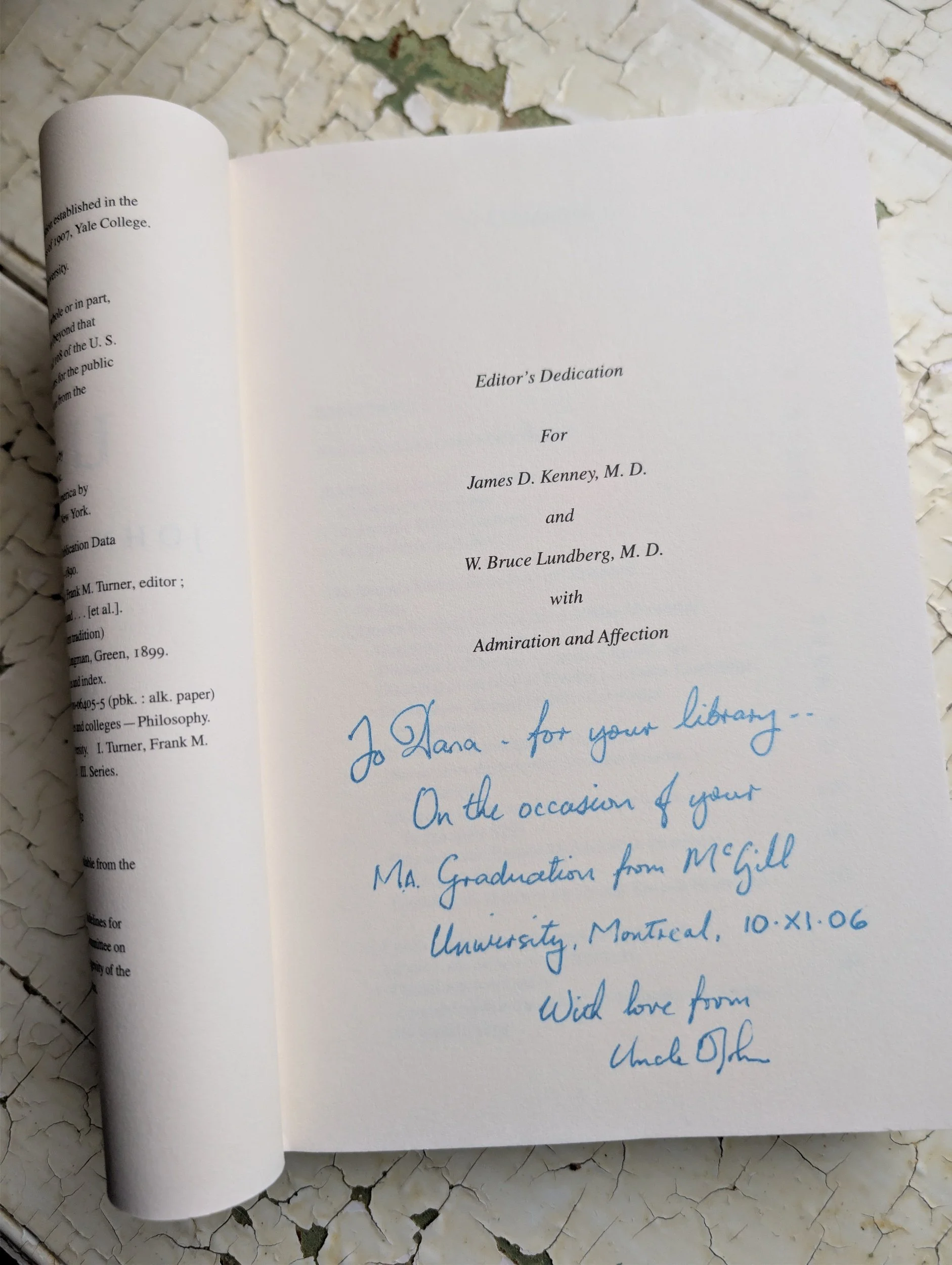
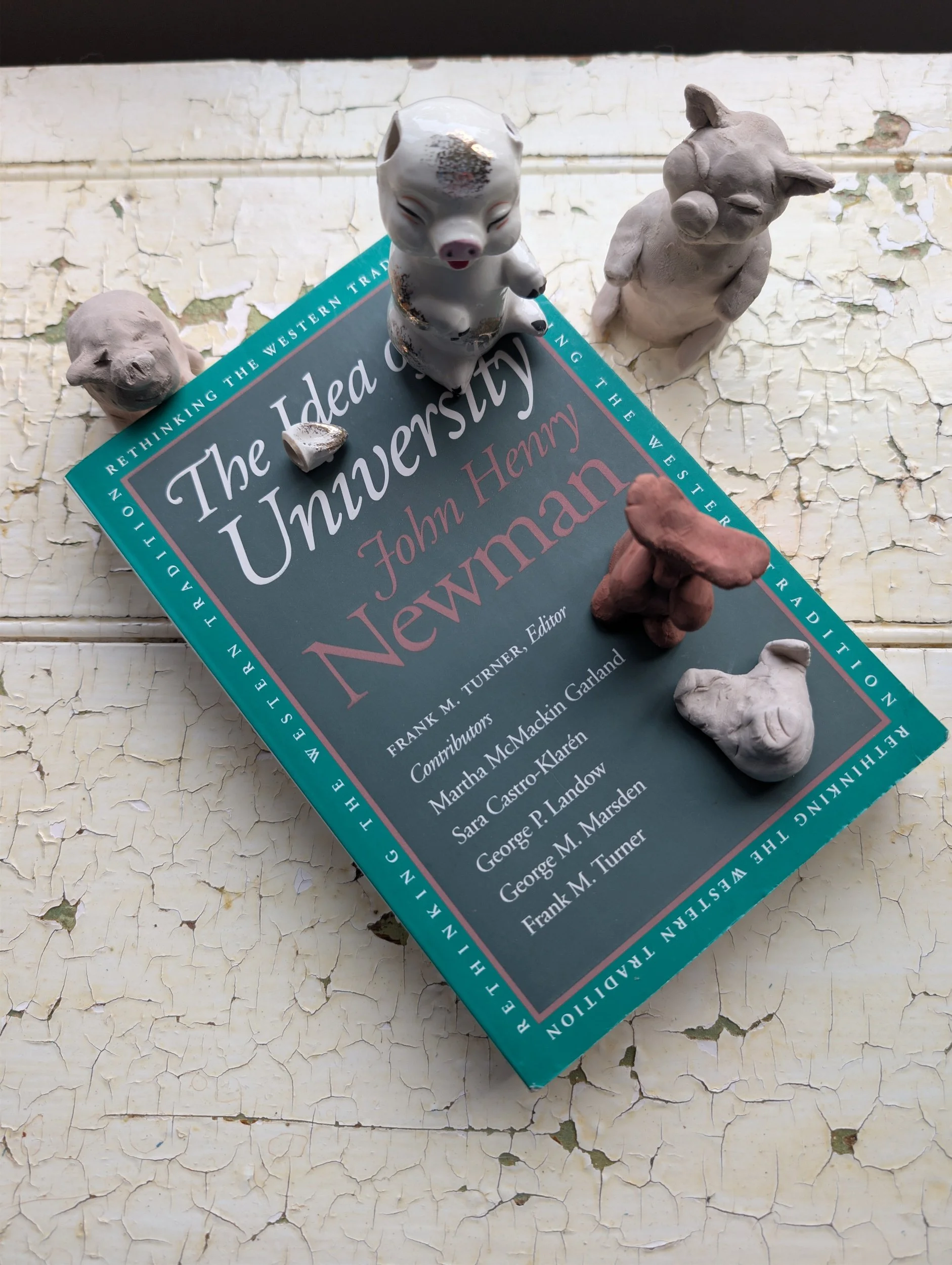
I first came to understand these deeper questions when I was searching to see if books had been written exploring the fundamental reasons why universities exist. That search led me to a remarkable book, which I later received as a gift for my MA graduation. For me, higher knowledge is practiced for Catholic spiritual reasons: an expression of faith, stewardship, and an active communion with the divine order of creation. But each person must find their own reason for studying, because it is simply healthy to train the mind for a life of outward devotion rather than self-absorption.
We can see this principle embodied clearly in disciplines like the culinary arts. Culinary students already know deep down what it means to look beyond mere commerce; they understand that food is meant to be shared, that feeding others is an act of humble service, and that true hospitality sustains the human spirit. Universities must reclaim that same ethos—training minds not just to earn a living, but to equip individuals to serve their communities and nourish a broken world.