
Why are we arguing?: The Law and the Church
In medieval times you'd be beaten with a broom around the church as a legal punishment if you misbehaved by committing a wrong such as stealing beer for example.
Should we bring that back? Or is that what social media is? (But I miss the IRL part of it.)
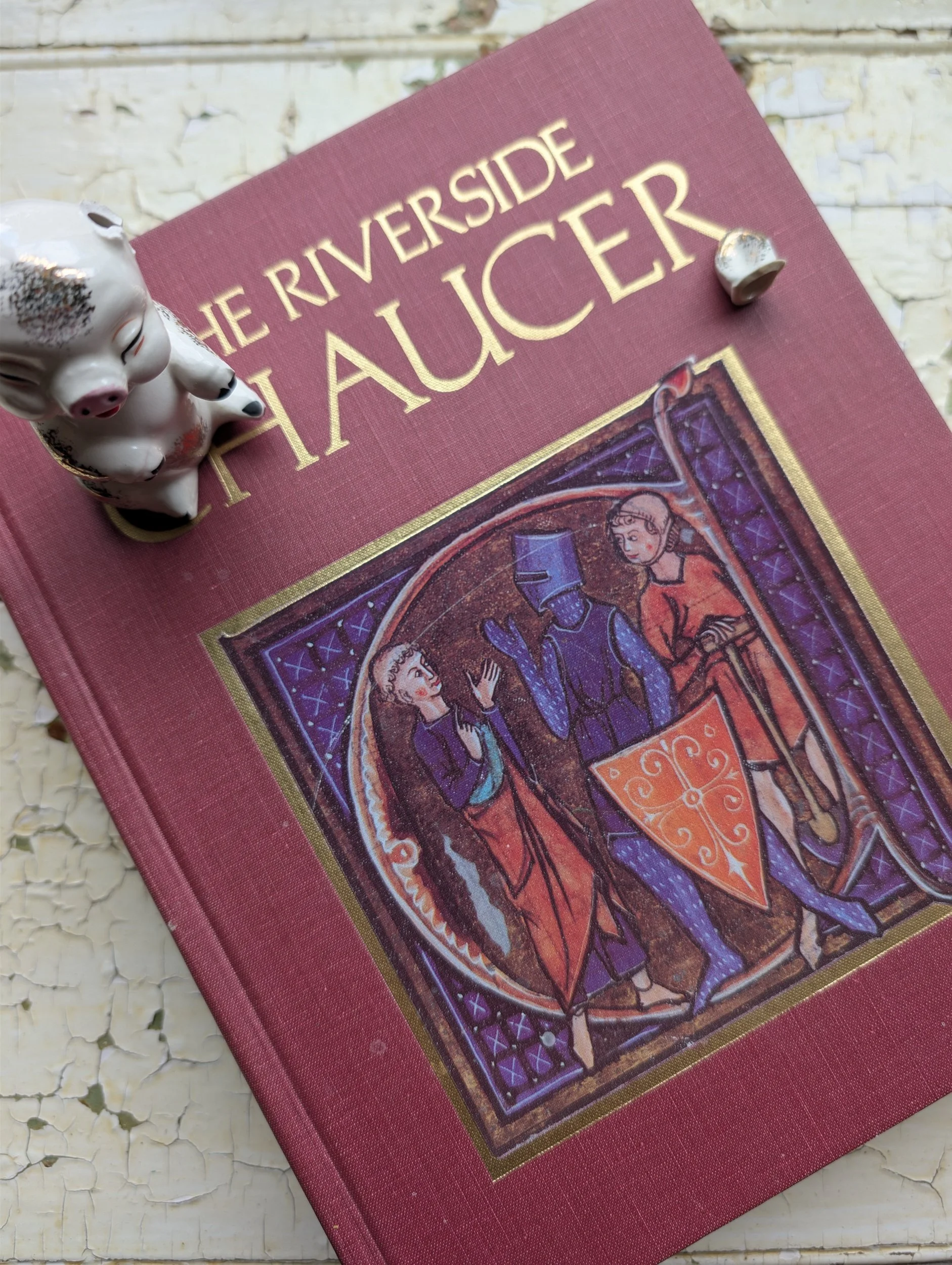
Before secular royal courts managed a unified legal framework, the Catholic Church was the primary engine of structured jurisprudence in early medieval Europe. Following the collapse of the Western Roman Empire, centralised state apparatuses vanished, leaving a legal vacuum filled by decentralised Germanic tribal customs. Into this vacuum stepped the Church, which preserved, written down, and actively administered a sophisticated system of law to maintain social order.
Penitentials and the Regulation of Behavior
In the early medieval centuries, justice was heavily decentralised and relied on blood feuds or tribal compensation (wergild). To curb systemic violence, Celtic and Anglo-Saxon monks pioneered penitentials—comprehensive handbooks that listed specific sins and matched them with exact, calibrated penances (such as structured fasts, prayers, or pilgrimages). These manuals functioned as early criminal codes. They defined moral and anti-social offenses—ranging from homicide and theft to domestic disputes—and imposed standardised spiritual punishments. In many communities, these church-administered penalties ran parallel to or directly reinforced secular tribal customs.
The Codification of Canon Law
As the Church centralised its administration, scattered local decrees, papal letters, and scriptural interpretations were synthesised into a unified legal system known as canon law. The watershed moment occurred around 1140 when a monk named Gratian compiled the Decretum Gratiani, which harmonized centuries of contradictory church rulings. Canon law governed a vast array of human activity well beyond theology, including:
* Family law, marriage legitimacy, and consanguinity rules.
* The administration of wills, inheritances, and charitable trusts.
* Contractual integrity and the prohibition of usury (lending money with interest).
* The discipline of the clergy and protection of ecclesiastical property.
The Roman-Canonical Court Procedure
Crucially, the Church did more than just write rules; it pioneered advanced procedural law. While early secular courts relied heavily on trial by ordeal or ritual oaths, ecclesiastical courts developed the Roman-canonical procedure. This system introduced written pleadings, the systematic examination of witnesses, recorded testimonies, and a professionalised judiciary.
Because canon law was literate, rationalized, and applied uniformly across borders from England to Italy, it served as the first truly transnational legal culture in Western history. When secular monarchs like England’s Henry II eventually sought to build centralised common law systems, they borrowed heavily from the sophisticated evidentiary and structural methods perfected by medieval church courts.
You're Saved: Hopefully
While official Catholic teaching maintains that the Church is necessary for salvation and that Jesus Christ is the sole redeemer, modern Catholic doctrine explicitly holds that individuals outside the visible boundaries of the Church—including those of other religions or no religion at all—can attain eternal salvation.
This framework balances strict theological boundaries with the concept of God's universal mercy:
* Invincible Ignorance: The Second Vatican Council document Lumen Gentium states that those who, through no fault of their own, do not know the Gospel of Christ or the Catholic Church, but who nevertheless sincerely seek God with a pure heart and are moved by grace, can achieve salvation.
* Living by Conscience: Non-Christians who strive by their deeds to do God's will as it is revealed to them through the dictates of their conscience are viewed as cooperating with divine grace, even if they cannot explicitly name Christ or the Church.
* An Invisible Connection: Catholic theology explains that anyone who is saved is saved through Christ and His Church (because Christ is the source of all salvation), but a person can be mystically or implicitly linked to that body without a formal, conscious membership.
Ultimately, the Catholic Church teaches that God judges each person based on the light, truth, and opportunities available to them, meaning righteous individuals of other faiths are entrusted to the mercy and grace of God.
So, go and share a little food and save yourself and someone else!
